Serenity Prime Official Website › Blog › Lemon balm and skullcap
Lemon Balm And Skullcap: What The Newest Trials Used
Two of the thirteen names on this formula have something in common that the other eleven mostly lack: most of their sleep-relevant trials were published since 2023, and most of those used a branded, standardised extract rather than the plain herb. That makes them look newer and better-evidenced than they are. This article reads the lemon balm and skullcap trials for what was actually given, to whom, and by whom.
- Lemon balm and skullcap are two of thirteen names on the Serenity Prime list. The bottle face prints no amount and no Supplement Facts panel, so no figure here is a dose in this capsule.
- An older pair of lemon balm laboratory crossovers found no straight dose-response line: in the first, calmness rose at the lowest dose and alertness fell at the highest; in the second, 600 mg eased the mood effects of a stress battery and 300 mg sped up arithmetic.
- The three newest lemon balm papers are all about one branded phospholipid extract, and their disclosure statements show manufacturer-linked authors on two of them.
- The newest skullcap sleep trial (66 adults, 400 mg a day for 56 days) reported better sleep scores and no adverse effects; the earlier skullcap mood trial in healthy volunteers found no difference on its anxiety scale.
- Skullcap has a documented adulteration problem: it has occasionally been mixed with germander, which contains potentially hepatotoxic compounds. Lemon balm has no comparable story in the papers cited here.
- Neither herb has a well-known sleep dose. The amounts used in these trials are 300 to 900 mg of lemon balm in single-dose studies, 400 mg a day for several weeks, and 350 mg three times a day or 400 mg a day for skullcap.
Why these two share an article
Lemon balm and skullcap turn up together on labels because they play the same role in a formulation: both are calming herbs from a traditional-use background, neither is a stimulant, neither is a household sleep name the way chamomile is. They also share a research pattern. For much of the last two decades the human evidence for each was thin, and since 2023 a small burst of trials has appeared, most of them built on standardised commercial extracts.
New is not the same as strong. A trial of a branded extract tells you something about that extract. Whether the unbranded material in a different capsule behaves the same way is a separate question, and one the trials weren’t designed to answer. The ingredients page puts both herbs in its “thin” evidence class, and this is the longer explanation of why.
What the Serenity Prime label says about them
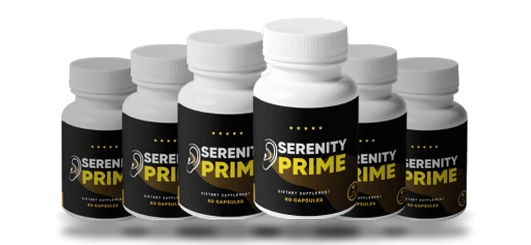
The seller lists lemon balm, Melissa officinalis, seventh of thirteen, and skullcap, given as Scutellaria lateriflora, twelfth. The vendor drew lemon balm among six botanical cut-outs and did not draw skullcap. The bottle face carries the brand, DIETARY SUPPLEMENT and 60 CAPSULES; this website’s label page records that no Supplement Facts panel appears in the vendor’s image pack or on the seller’s page, and the back of the bottle has never been photographed.
So the amount of either herb is unknown to this desk and to a buyer until the back label is read, and so is whether the amounts are printed individually or grouped in a blend total. The plant part, the extraction and any standardisation are also unstated. Every figure in this article belongs to a published study.
Lemon balm, the older laboratory studies: more was not better
The oldest single-herb human data sit in two crossovers by Kennedy and colleagues, both in healthy volunteers, both about acute effects rather than sleep.
In the first, published in 2002, 20 healthy young participants received single doses of 300, 600 and 900 mg of a standardised Melissa officinalis extract or a matching placebo, a week apart, and were tested on a cognitive battery at 1, 2.5, 4 and 6 hours. Self-rated calmness was raised at the earliest time points by the lowest dose, while self-rated alertness was significantly reduced at every time point after the highest. Accuracy of attention improved after 600 mg, and there were time- and dose-specific reductions in secondary memory and working memory.
In the second, published in 2004, 18 healthy volunteers received 300 mg, 600 mg or placebo on separate days, then did a 20-minute laboratory stress battery. The 600 mg dose ameliorated the negative mood effects of the battery, with higher self-rated calmness and lower self-rated alertness; the 300 mg dose speeded up mental arithmetic without a loss of accuracy.
There are two things to take from these. The first is that neither shows a straight dose-response line: the effect you see depends on the dose and on which outcome you look at. The second, for anyone thinking about an evening capsule, is that “reduced alertness” shows up twice at the higher doses. That is presumably what a person would want at bedtime and not at a desk, and it is a reminder that a herb described as calming is doing something measurable to attention as well as mood.
Lemon balm, the newer trials: one branded extract
Three recent papers carry the modern lemon balm case, and they are closely related.
Bano and colleagues (2023) ran a three-week, double-blind, placebo-controlled trial in 100 healthy adults with moderate depression, anxiety or stress scores, or with poor sleep (a Pittsburgh Sleep Quality Index score above 5). The intervention was a standardised phospholipid carrier-based lemon balm aqueous extract, 200 mg tablets twice a day, so 400 mg daily. The reported results are improvements in depressive mood, anxiety, stress, positive and negative affect, mental wellbeing and quality-of-life scores, all P < 0.001. The abstract does not give a separate sleep result, even though poor sleep was one of the routes into the trial. No treatment-emergent effects or serious adverse events were reported.
Di Pierro and colleagues (2024) tested a lemon balm phytosome, the same idea of pairing the extract with phospholipids to improve absorption, in a double-blind crossover in 30 people. Each took two 200 mg tablets every evening about half an hour before bed for two weeks, with a washout between periods. The Insomnia Severity Index was 6.8 ± 4.1 in the treated group against 9.7 ± 3.7 on placebo, a 2.9-point difference (P = 0.003). Slow-wave sleep duration rose by an average of 15% and REM fell by 10%, and 87% of participants on the extract reported better sleep quality against 30% on placebo. No significant change in physical activity or anxiety levels was seen.
One caveat sits inside the methods. In the full text, sleep stages were tracked with a wrist-worn consumer device, not laboratory polysomnography, so the slow-wave and REM figures come from a wearable’s estimates. The Insomnia Severity Index and the self-report are unaffected by that, and they are also the more likely to be shaped by expectation.
The third paper, Mazzola and colleagues (2026), is a secondary analysis in a subgroup of 12 people who took 400 mg a day of the phospholipid extract for three weeks. Salivary cortisol fell progressively across the period (main effect of time P < 0.001), and the sleep, mood and wellbeing questionnaire scores were found to correlate with one another. Read that carefully. The abstract reports a change over time in 12 people; it does not report a placebo comparison for the cortisol result, which limits what it can show about the extract itself.
Who was involved in the newest lemon balm work
Disclosure statements are boring until they are the only thing that separates two readings of the same result. Here they are, from the papers themselves.
The Bano trial declares no commercial or financial relationships. The Di Pierro paper states that its first author is scientific director of Pharmextracta, a company in Pontenure, Italy, and that two other authors are consultants to it. The Mazzola secondary analysis states that one author is an employee of Indena S.p.A., Milan, and that Relissa and Phytosome are trademarks owned by Indena, adding that no specific funding was received. The full text of the Di Pierro paper identifies its test material as Indena’s Melissa Phytosome, sold as Relissa, in a tablet from Pharmextracta.
None of that makes the results wrong. Industry-linked trials are common in supplements and many are well run. It does mean that the three newest lemon balm papers appear to be three looks at one product family, and that the strongest single result (the 2.9-point Insomnia Severity Index difference) came from a 30-person crossover by authors with a link to its maker. That is a reason to wait for replication, not a reason to dismiss it.
What the anxiety meta-analysis adds, and doesn’t
For anxiety and mood, Ghazizadeh and colleagues (2021) pooled randomised trials up to October 2020. Lemon balm improved anxiety scores (standardised mean difference −0.98, 95% confidence interval −1.63 to −0.33, P = 0.003) and depression scores (−0.47, −0.73 to −0.21, P = 0.0005) compared with placebo, without serious side effects. The authors add that the evidence suggests benefit “particularly in the acute setting,” that heterogeneity was high, that the number of trials was small and their methods differed, and that further high-quality studies are needed.
Note what is missing: sleep. This is a mood-and-anxiety analysis. It supports lemon balm as a calming herb in short-term settings and doesn’t address whether it helps a person who lies awake at 2 a.m., which is a different outcome.
Skullcap: two mood trials in healthy volunteers
Skullcap’s older human evidence is two small studies in healthy people, and only one of them has figures in its abstract. Wolfson and Hoffmann (2003) report a double-blind, placebo-controlled study of healthy subjects with “noteworthy anxiolytic effects”; the abstract gives no numbers, so this desk doesn’t lean on it.
Brock and colleagues (2014) randomised 43 healthy participants to a sequence of Scutellaria lateriflora, 350 mg three times a day (1,050 mg daily by arithmetic), or placebo, each for two weeks. Most participants were not anxious to start with: 81% were mildly anxious or less on the Beck Anxiety Inventory. There was no significant difference between skullcap and placebo on that inventory (P = 0.191), and a significant group effect (P = 0.049) that the authors read as a carryover effect. Total Mood Disturbance on the Profile of Mood States fell significantly from baseline on skullcap (P < 0.001) and not on placebo (P = 0.072). The authors say skullcap enhanced global mood without a reduction in energy or cognition, and that carryover, generally low anxiety scores and baseline differences may have reduced the chance of significance.
An honest summary: a herb that lifted mood in healthy people on one scale, did not separate from placebo on the anxiety scale, and had a carryover problem in its own crossover. Neither study involved sleep.
Skullcap: a 56-day insomnia trial
The one skullcap trial with a sleep target is Di Minno and colleagues (2025) in Nutrients. It was a single-centre, randomised, double-blind, placebo-controlled crossover in 66 adults aged 18 to 70 with mild to moderate primary insomnia. Participants took either a chemically characterised S. lateriflora extract-based food supplement at 400 mg a day or placebo for 56 days, with a 28-day washout between the two. The primary outcome was the Pittsburgh Sleep Quality Index; secondary outcomes were time to fall asleep, sleep efficiency, total sleep time and a visual analogue scale.
The authors report significant improvement on both primary and secondary outcomes and no adverse effects reported by any participant. One author is disclosed as employed by CEINGE-Biotecnologie Avanzate, and the remaining authors declare no commercial or financial relationships. The abstract reports no figures for the size of the change, so a reader can’t judge how large the improvement was without opening the paper.
Two features are useful. It is a genuine insomnia population rather than healthy volunteers, and the 56-day length is the longest of any trial in this article. It is also a single trial, a single extract and a single centre, and nothing in it tells you whether a differently made skullcap product would perform the same.
The skullcap species and adulteration problem
There are two separate skullcap questions, and both are the sort of thing a label ought to answer and, here, doesn’t.
The first is species. Every trial in this section used Scutellaria lateriflora, the American species. A different skullcap, Scutellaria baicalensis, is common in supplements and has its own research, and a one-word ingredient name covers both. This website’s label page records the seller’s form as S. lateriflora, but that is the seller’s website naming it, not a printed panel.
The second is adulteration. Lin, Harnly and Upton (2009) note that skullcap has “occasionally been adulterated” with two germander species, Teucrium canadense and T. chamaedrys, which contain potentially hepatotoxic diterpenes, and they developed a chromatographic profile that can distinguish the two, detecting 5% germander mixed into skullcap by UV or mass-spectrometry total ion count and 1% by selected-ion monitoring. Sandasi and colleagues (2014) describe the same concern in a quality-control paper, noting that due to intentional or unintentional adulteration, cases of hepatotoxicity have been reported.
A separate case report, Yang and colleagues (2012), describes an elderly woman who developed cholestasis and hepatitis on a joint-health supplement containing Chinese skullcap and black catechu, recovered when she stopped, and relapsed when she restarted. Chinese skullcap is ordinarily S. baicalensis, not the American species named for this bottle, and the supplement had several ingredients. It is a single case, the weakest kind of evidence. It belongs here as a reason for asking which skullcap a product contains, not as a finding about this capsule.
There is no published test of this capsule in any of the papers cited, and this desk is not suggesting the bottle is adulterated. The point is narrower: a herb with a known adulteration risk is a good candidate for asking the seller for a certificate of analysis. The batch page records the certificate reference on this pack and explains what such references do and do not prove.
Both herbs in one table
Every row is a published study. None is a statement about this capsule.
| Study | Herb | Who | What they took | Length | What it reported |
|---|---|---|---|---|---|
| Kennedy 2002 | Lemon balm | 20 healthy young adults | 300, 600 or 900 mg once | Single doses, 7 days apart | Calmness up at lowest dose; alertness down at highest |
| Kennedy 2004 | Lemon balm | 18 healthy adults | 300 or 600 mg once | Single doses, 7 days apart | 600 mg eased stress-induced mood change |
| Bano 2023 | Lemon balm | 100 adults, distress or poor sleep | 400 mg a day, phospholipid extract | 3 weeks | Better mood, anxiety, stress, wellbeing scores |
| Di Pierro 2024 | Lemon balm | 30 adults | Two 200 mg tablets each evening, phytosome | 2 weeks per period | ISI lower by 2.9 points |
| Brock 2014 | Skullcap | 43 healthy adults | 350 mg three times daily | 2 weeks per period | Mood scale improved; anxiety scale did not separate |
| Di Minno 2025 | Skullcap | 66 adults, mild to moderate insomnia | 400 mg a day, characterised extract | 56 days per period | Better PSQI and secondary sleep outcomes |
ISI is the Insomnia Severity Index; PSQI is the Pittsburgh Sleep Quality Index.
Lemon balm and skullcap are two of thirteen names on the Serenity Prime label
The trials used stated, and often branded, extracts. The bottle in your hand carries whatever its back label says.
One bottle $69 · six bottles $294 · 60-day money-back guarantee
Order Serenity Prime On The Official Website60 capsules a bottle · lot SER-26/SE-3930 · free US shipping
How to read a branded-extract trial
- Is the material the same as the one on the shelf? A standardised, phospholipid-bound or characterised extract is a specific product. A capsule of unknown extract type isn’t it, and the trial can’t vouch for it.
- Who paid, who wrote, who made it? The disclosure lines are usually at the very end of the paper. Read them before the abstract’s conclusion.
- How was sleep measured? A wrist device, a questionnaire and a polysomnography lab answer different questions, and a questionnaire is the measure most exposed to expectation.
- How long, and what came after? Two weeks and 56 days are not the same claim. How long a sleep supplement takes to judge is the article to read for your own trial period.
What this evidence does and does not support
Fairly read, lemon balm is a calming herb with old acute-dose laboratory data, a mood-and-anxiety meta-analysis with high heterogeneity, and three related recent papers on one branded extract, one of which reports a sleep-questionnaire difference in 30 people. Skullcap is a herb with two small mood trials in healthy volunteers and one 66-person insomnia trial of a characterised extract, plus a quality-control literature about adulteration. Neither has a settled sleep dose, and neither has been tested in the way ashwagandha or melatonin has.
It doesn’t support any claim that a specific amount of either herb improves sleep, and it says nothing about a capsule whose amounts, extract types and skullcap species are unpublished. The useful moves are practical ones: read the back label for an amount of each, check the species named for skullcap, ask for the certificate of analysis, and set what you find against 400 mg a day, the figure that appears across the more recent lemon balm and skullcap trials, remembering that a matching number isn’t a matching product.
If you would rather read about an ingredient with more human sleep trials behind it, ashwagandha, read one trial at a time is the place to go. For the parallel articles on this list’s other calming herbs, see chamomile and passionflower. And the borrowed-evidence problem this article touches on for lemon balm is set out in full in why hops almost never appears without valerian.
References
- Kennedy DO, Scholey AB, Tildesley NT, Perry EK, Wesnes KA. Modulation of mood and cognitive performance following acute administration of Melissa officinalis (lemon balm). Pharmacol Biochem Behav. 2002;72(4):953-64. PMID 12062586. https://pubmed.ncbi.nlm.nih.gov/12062586/
- Kennedy DO, Little W, Scholey AB. Attenuation of laboratory-induced stress in humans after acute administration of Melissa officinalis (Lemon Balm). Psychosom Med. 2004;66(4):607-13. PMID 15272110. https://pubmed.ncbi.nlm.nih.gov/15272110/
- Bano A, Hepsomali P, Rabbani F, et al. The possible "calming effect" of subchronic supplementation of a standardised phospholipid carrier-based Melissa officinalis L. extract in healthy adults with emotional distress and poor sleep conditions: results from a prospective, randomised, double-blinded, placebo-controlled clinical trial. Front Pharmacol. 2023;14:1250560. PMID 37927585. https://pubmed.ncbi.nlm.nih.gov/37927585/
- Di Pierro F, Sisti D, Rocchi M, et al. Effects of Melissa officinalis Phytosome on Sleep Quality: Results of a Prospective, Double-Blind, Placebo-Controlled, and Cross-Over Study. Nutrients. 2024;16(23):4199. PMID 39683592. https://pubmed.ncbi.nlm.nih.gov/39683592/
- Mazzola G, Rondanelli M, Lazzarotti A, Misiano P, Petrangolini G, Perna S. Salivary cortisol dynamics and their relationship with sleep and mental well-being in adults receiving a phospholipid-based Melissa officinalis supplement: a secondary analysis in a subpopulation. Food Nutr Res. 2026;70. PMID 42232738. https://pubmed.ncbi.nlm.nih.gov/42232738/
- Ghazizadeh J, Sadigh-Eteghad S, Marx W, et al. The effects of lemon balm (Melissa officinalis L.) on depression and anxiety in clinical trials: A systematic review and meta-analysis. Phytother Res. 2021;35(12):6690-6705. PMID 34449930. https://pubmed.ncbi.nlm.nih.gov/34449930/
- Wolfson P, Hoffmann DL. An investigation into the efficacy of Scutellaria lateriflora in healthy volunteers. Altern Ther Health Med. 2003;9(2):74-8. PMID 12652886. https://pubmed.ncbi.nlm.nih.gov/12652886/
- Brock C, Whitehouse J, Tewfik I, Towell T. American Skullcap (Scutellaria lateriflora): a randomised, double-blind placebo-controlled crossover study of its effects on mood in healthy volunteers. Phytother Res. 2014;28(5):692-8. PMID 23878109. https://pubmed.ncbi.nlm.nih.gov/23878109/
- Di Minno A, Morone MV, Buccato DG, et al. Efficacy and Tolerability of a Chemically Characterized Scutellaria lateriflora L. Extract-Based Food Supplement for Sleep Management: A Single-Center, Controlled, Randomized, Crossover, Double-Blind Clinical Trial. Nutrients. 2025;17(9):1491. PMID 40362800. https://pubmed.ncbi.nlm.nih.gov/40362800/
- Lin LZ, Harnly JM, Upton R. Comparison of the phenolic component profiles of skullcap (Scutellaria lateriflora) and germander (Teucrium canadense and T. chamaedrys), a potentially hepatotoxic adulterant. Phytochem Anal. 2009;20(4):298-306. PMID 19402188. https://pubmed.ncbi.nlm.nih.gov/19402188/
- Sandasi M, Vermaak I, Chen W, Viljoen AM. Skullcap and germander: preventing potential toxicity through the application of hyperspectral imaging and multivariate image analysis as a novel quality control method. Planta Med. 2014;80(15):1329-39. PMID 25184892. https://pubmed.ncbi.nlm.nih.gov/25184892/
- Yang L, Aronsohn A, Hart J, Jensen D. Herbal hepatoxicity from Chinese skullcap: A case report. World J Hepatol. 2012;4(7):231-3. PMID 22855699. https://pubmed.ncbi.nlm.nih.gov/22855699/