Serenity Prime Official Website › The scorecard
The scorecardChoosing A Sleep Supplement: Seven Checks
Seven questions you can ask of any sleep supplement label, in a shop or a browser tab.
An amount for every ingredient, a melatonin figure and whether it is a small one, the plant part for each botanical, evidence that belongs to the ingredient rather than to a pairing, an interaction flagged where a buyer sees it, a refund route that survives an opened bottle, and a batch anybody can trace.
A checklist that works on any label, applied at the end to the product this website sells.
Why a checklist beats a brand name
What a checklist does that a brand name cannot.
Brand recognition in this category is bought rather than earned. A sleep supplement that spends more on advertising is not more likely to carry an effective dose, and the label is where the difference shows up.
A checklist is portable. It works on a bottle you have never heard of, on a product your neighbour recommends, and on the one this website sells. The reader who learns it stops needing to trust anybody, including this desk.
The seven below are ordered so that the first one gates the rest. A label that fails check one cannot be scored on checks two, three or four at all, which is the single most useful thing to know about a bottle in ten seconds.
The seven checks
Seven questions, in an order where the first one gates the rest.
1. Is there an amount beside every named ingredient?
The gate. A panel that prints milligrams against each name lets every other question be answered. A proprietary blend printing one weight for a group hides the split between them, and a label with no panel at all cannot be scored past this line.
2. If there is melatonin, how much, and is it a small amount?
The one ingredient with a settled dose answer. 0.3 mg restored sleep efficiency in adults over fifty and 3.0 mg did no better, while the pooled literature sits around 3 mg. A label carrying 10 mg is telling you it has not read its own evidence.
3. Does each botanical name a species and a plant part?
Root and leaf from one plant are two different ingredients with two different chemistries. Skullcap is the trap in this category: both human trials used Scutellaria lateriflora, and a different species with its own separate research is sold under the same one-word name.
4. Does the evidence belong to the ingredient, or to a pairing?
The borrowed-evidence check. Hops has almost no human sleep evidence without valerian beside it: 120 mg of hops with 500 mg of valerian is the shape of every positive result. If a bottle carries one half of a studied pair, the trials do not transfer.
5. Is an interacting ingredient flagged where a buyer will see it?
St. John’s wort is the one that matters most. It roughly doubled alprazolam clearance at 900 mg a day and reduced oral-contraceptive exposure with breakthrough bleeding. A label carrying it should say so somewhere a buyer looks, not only in an ingredient list.
6. Is there a refund route that survives an opened bottle?
These products take weeks to judge, so a sealed-only return policy is worthless. Look for a window in days, an explicit statement that opened bottles are covered, and a phone number that answers.
7. Is the batch traceable and is there a desk that answers?
A lot number on the base, a best-before date beside it, and a contact that can match an order to a run. None of that proves quality; all of it is what makes a complaint actionable.
Scoring Serenity Prime against all seven
The seven questions again, this time turned on the bottle this website sells.
| The question | Answer | On what basis |
|---|---|---|
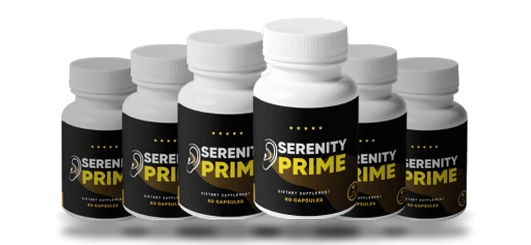
| 1. An amount beside every named ingredient | Fail | Thirteen ingredients are named and the amounts come with the bottle. There is no panel on the label face, none in the seller’s artwork, and no photograph of the back of the bottle exists in anything published. |
| 2. A melatonin figure, and a small one | Fail | Melatonin is fourth on the list and its quantity is not something a buyer can read before ordering. This is the row that costs the most, because it is the one ingredient where the dose decides the answer. |
| 3. Species and plant part named | Fail | Eight botanicals, named in one word each. Skullcap is the sharpest example: both human trials used the American species and the label does not distinguish it from the other one on the market. |
| 4. Evidence belongs to the ingredient, not a pairing | Partial | Eleven of the thirteen are fine on this test. Hops is not, because its human evidence is valerian-and-hops evidence and there is no valerian in this bottle. Lemon balm is a milder version of the same thing. |
| 5. The interacting ingredient flagged where a buyer sees it | Partial | St. John’s wort is named openly in the seller’s own ingredient list, which is more than some products manage. No caution appears on any published artwork, so the flagging is a list entry rather than a warning. |
| 6. A refund route that survives an opened bottle | Pass | Two months on any tier, counted from payment, with opened bottles explicitly covered, a procedure written down in five steps and a telephone desk at +1 (302) 200-3480. The strongest row on the whole card. |
| 7. A traceable batch and a desk that answers | Pass | Lot SER-26/SE-3930 and certificate reference SER-3930-26-SE come with the pack, the bottle carries a lot and a date on its base, and the order desk can match an order to a run. |
Three answered no, two answered yes and two land in between. A scorecard that came back clean would not be worth printing.
The three rows it fails, in detail
What exactly fails, what each failure costs, and what would fix it.
All three failures come from one fact and it is worth separating them anyway, because they cost different things.
Check one is the gate and this label does not pass it. Thirteen ingredients are named and the quantities come with the bottle rather than with anything a buyer can read before ordering. That is not the same as a proprietary blend, which is worse in one respect and better in another: a blend at least prints a total.
Check two is the expensive one. The dose-ranging trial is the clearest dose answer in the whole category and it cannot be applied here. Worse, the melatonin content problem is specific and documented: thirty-one products assayed ranged from 83 per cent below to 478 per cent above their labels, and a 2023 JAMA analysis found it unchanged. A printed melatonin figure would be worth reading with scepticism; an unprinted one cannot be read at all.
Check three fails on eight botanicals at once. One-word ingredient names are common and they are still a failure, because the skullcap sleep trial and the skullcap mood study both used Scutellaria lateriflora and the label cannot tell a reader whether that is what is in the capsule. The same applies to the St. John’s wort, where a 2020 review shows the interaction risk tracks hyperforin content.
None of those three can be argued away by a retailer, including this one. They are properties of the label and they would be fixed by four numbers and a plant part against each botanical.
The rows it passes, and what they are worth
Two strong rows, two partials, and what each is actually worth.
A scorecard that only records failures is as useless as one that only records passes, and two of these rows are genuinely strong.
Check six is the best thing about this product commercially. 60 days from the date of purchase, covering opened bottles, on every tier, with a written procedure and a phone desk. On a product whose own research runs eight to ten weeks, an opened-bottles guarantee is the difference between a purchase and a gamble.
It is not perfect, and the imperfection is worth naming here rather than hiding in the pass. Two of the seller’s own documents give different start dates and different return addresses, which is why the refund policy page prints both.
Check seven passes on the ordinary evidence: a lot reference and a certificate reference come with the pack, the bottle carries a lot and a date on its base, and there is a desk that can match an order to a run. That is administrative rather than scientific, and it is what makes a complaint actionable.
Check five deserves its partial rather than a failure. The seller names St. John’s wort openly in a list of thirteen, which is more disclosure than a proprietary blend would give, and the interaction is documented well enough that a reader who sees the name can look it up. What is missing is a caution anywhere a buyer would actually encounter it.
Check four also lands in between. Eleven of the thirteen pass it cleanly. Hops does not, and that is one row out of thirteen rather than a formula-wide problem.
Applying the same seven to anything else
Three notes on using the checklist, and one check it leaves out on purpose.
The scorecard is more useful than the score. Three notes on carrying it to another bottle.
Most products in this aisle fail check one, and a surprising number fail it while printing a panel: a proprietary blend showing 750 mg across nine herbs passes the letter of the check and fails its purpose. Read for a figure against each name.
Check two catches more products than any other. A 10 mg melatonin gummy is common, and it is thirty times the amount that worked in the clearest trial, in a category where the quality control has been described bluntly for a decade.
Checks six and seven are the ones people skip and then regret. Before reading an ingredient list at all, find the refund window and the phone number. If either is missing, the rest of the label is academic.
And one check this list deliberately does not include: a seal wall. The audit on this website found two of the four seals on this pack name nobody at all, which is the ordinary state of a badge row in this category.
What this scorecard cannot see
Three things a label check cannot establish, whatever the score.
Three honest limits, because a checklist presented as complete is its own kind of misinformation.
It cannot see inside a capsule. Every check above reads a label, and a label is a declaration rather than an assay. A product could pass all seven and still carry less than it prints, which is exactly what the melatonin assays found across thirty-one products.
It cannot weigh a formulation. Thirteen ingredients chosen to work together might be a better product than four chosen for their individual trial records, and no check on this list can tell. Nobody has tested a formula of this size, here or anywhere else.
And it cannot tell you whether something will work for you. NCCIH’s guidance on supplements makes the general point; the specific one is that a scorecard narrows the field and a sixty-day window settles the rest.
Sources behind the seven checks
The trial behind each check, in the order the checks appear.
- Zhdanova IV, Wurtman RJ, Regan MM, et al. Melatonin treatment for age-related insomnia. J Clin Endocrinol Metab. 2001;86(10):4727-30. PMID 11600532. https://pubmed.ncbi.nlm.nih.gov/11600532/
- Ferracioli-Oda E, Qawasmi A, Bloch MH. Meta-analysis: melatonin for the treatment of primary sleep disorders. PLoS One. 2013;8(5):e63773. PMID 23691095. https://pubmed.ncbi.nlm.nih.gov/23691095/
- Erland LA, Saxena PK. Melatonin Natural Health Products and Supplements: Presence of Serotonin and Significant Variability of Melatonin Content. J Clin Sleep Med. 2017;13(2):275-281. PMID 27855744. https://pubmed.ncbi.nlm.nih.gov/27855744/
- Grigg-Damberger MM, Ianakieva D. Poor Quality Control of Over-the-Counter Melatonin: What They Say Is Often Not What You Get. J Clin Sleep Med. 2017;13(2):163-165. PMID 28095978. https://pubmed.ncbi.nlm.nih.gov/28095978/
- Cohen PA, Avula B, Wang YH, et al. Quantity of Melatonin and CBD in Melatonin Gummies Sold in the US. JAMA. 2023;329(16):1401-1402. PMID 37097362. https://pubmed.ncbi.nlm.nih.gov/37097362/
- Koetter U, Schrader E, Kaufeler R, et al. A randomized, double blind, placebo-controlled, prospective clinical study to demonstrate clinical efficacy of a fixed valerian hops extract combination (Ze 91019) in patients suffering from non-organic sleep disorder. Phytother Res. 2007;21(9):847-51. PMID 17486686. https://pubmed.ncbi.nlm.nih.gov/17486686/
- Morin CM, Koetter U, Bastien C, et al. Valerian-hops combination and diphenhydramine for treating insomnia: a randomized placebo-controlled clinical trial. Sleep. 2005;28(11):1465-71. PMID 16335333. https://pubmed.ncbi.nlm.nih.gov/16335333/
- Di Minno A, Morone MV, Buccato DG, et al. Efficacy and Tolerability of a Chemically Characterized Scutellaria lateriflora L. Extract-Based Food Supplement for Sleep Management. Nutrients. 2025;17(9):1447. PMID 40362800. https://pubmed.ncbi.nlm.nih.gov/40362800/
- Brock C, Whitehouse J, Tewfik I, et al. American Skullcap (Scutellaria lateriflora): a randomised, double-blind placebo-controlled crossover study of its effects on mood in healthy volunteers. Phytother Res. 2014;28(5):692-8. PMID 23878109. https://pubmed.ncbi.nlm.nih.gov/23878109/
- Markowitz JS, Donovan JL, DeVane CL, et al. Effect of St John's wort on drug metabolism by induction of cytochrome P450 3A4 enzyme. JAMA. 2003;290(11):1500-4. PMID 13129991. https://pubmed.ncbi.nlm.nih.gov/13129991/
- Hall SD, Wang Z, Huang SM, et al. The interaction between St John's wort and an oral contraceptive. Clin Pharmacol Ther. 2003;74(6):525-35. PMID 14663455. https://pubmed.ncbi.nlm.nih.gov/14663455/
- Nicolussi S, Drewe J, Butterweck V, et al. Clinical relevance of St. John's wort drug interactions revisited. Br J Pharmacol. 2020;177(6):1212-1226. PMID 31742659. https://pubmed.ncbi.nlm.nih.gov/31742659/
- Brouns A, Lechtenberg M, Hensel A. Passionflower (Passiflora incarnata): Quality of Food Supplements Versus Registered Herbal Medicinal Products. Planta Med. 2025;91(9):532-540. PMID 40245939. https://pubmed.ncbi.nlm.nih.gov/40245939/
- Langade D, Kanchi S, Salve J, et al. Efficacy and Safety of Ashwagandha (Withania somnifera) Root Extract in Insomnia and Anxiety: A Double-blind, Randomized, Placebo-controlled Study. Cureus. 2019;11(9):e5797. PMID 31728244. https://pubmed.ncbi.nlm.nih.gov/31728244/
- Using Dietary Supplements Wisely. National Center for Complementary and Integrative Health, National Institutes of Health. https://www.nccih.nih.gov/health/using-dietary-supplements-wisely
Order Serenity Prime with the scorecard in front of you
Two rows passed, two partial and three failed, and every one of them is on this page. Free US shipping, and 60 days from the date of purchase to change your mind.
One bottle $69 · six bottles $294 · 60-day money-back guarantee
Order Serenity Prime On The Official Website60 capsules a bottle · lot SER-26/SE-3930 · free US shipping