Serenity Prime Official Website › Ingredients
IngredientsSerenity Prime Ingredients
Thirteen ingredients are named for Serenity Prime, and six of them have been given to people in a trial with a sleep outcome.
Ashwagandha and melatonin carry the most research, magnesium and chamomile sit in the middle, and taurine has no human sleep trial at any dose. This page sorts all thirteen by evidence, names the plant part each trial used, and prints the amounts those trials ran at.
Thirteen names, re-sorted by how much human research stands behind each one.
What are the thirteen ingredients in Serenity Prime, sorted by evidence?
The same thirteen names, ordered by the weight of the research instead of by the seller’s preference.
Label order tells you what the seller wants read first. Sorted by how much human evidence stands behind each name, the same thirteen fall into six groups, and the distance between the top and the bottom of the list is larger than the bottle suggests.
| Ingredient | Form named | Evidence class | What that class means here |
|---|---|---|---|
| Ashwagandha | Withania somnifera, root | Strongest | A ten-week randomised trial in people whose insomnia was confirmed by actigraphy, plus a head-to-head against melatonin. |
| Melatonin | N-acetyl-5-methoxytryptamine | Strongest | Dozens of trials, a settled effective range, and a guideline that weighs it for chronic insomnia and comes down against. |
| Magnesium | elemental magnesium | Moderate | One eight-week insomnia trial in older adults and a small pooled analysis, both of them minor in size. |
| Chamomile | Matricaria chamomilla, flower | Moderate | Two sleep trials that disagree with each other, and a larger anxiety trial that used three times the dose. |
| Passiflora | Passiflora incarnata, aerial parts | Moderate | Three human results in three different preparations: a tea, a tincture and one pre-surgical capsule. |
| Skullcap | Scutellaria lateriflora | Thin | Two trials in total, one of them in people who were not anxious to start with. |
| Lemon Balm | Melissa officinalis, leaf | Thin | One acute laboratory stress crossover and one recent cortisol analysis, neither of them an insomnia study. |
| Vitamin B6 | pyridoxine hydrochloride | Thin | A five-night dreaming study that changed dream recall and left sleep itself alone. |
| Goji | Lycium barbarum, fruit | Thin | A fourteen-day trial of a standardised juice, with sleep quality among many subjective outcomes. |
| Calcium | as a dietary mineral | Survey only | Nutrition-survey associations between habitual intake and sleep duration, in both directions, and no trial. |
| Hops | Humulus lupulus, strobile | Borrowed | Every positive human result has valerian beside it. The only hops-alone signal is non-alcoholic beer. |
| St. John’s Wort | Hypericum perforatum | Wrong endpoint | A substantial evidence base, almost all of it for depression, plus a well-documented set of drug interactions. |
| L-Taurine | 2-aminoethanesulfonic acid | None in sleep | No human sleep trial exists at any dose. The human work is on cognition and on dietary exposure. |
Classed by this desk from the trials cited further down this page. The class describes the published research on the ingredient, never the capsule.
Two names carry real trial weight. Ashwagandha has a ten-week study in people whose sleep was measured rather than remembered, and melatonin has more human data than the other twelve put together.
The last three rows are the interesting ones, and each is interesting for a different reason: hops has always been studied with another herb beside it, St. John’s wort has been studied heavily for something else entirely, and taurine has no sleep trial in people at all.
Which Serenity Prime ingredients have a human sleep trial behind them?
Three piles: tested for sleep, tested for something near it, and included on reasoning.
This is the single question worth asking of any nighttime blend, and it separates the thirteen into three piles rather than two.
| Ingredient | Human sleep trial? | What the trial actually measured |
|---|---|---|
| Ashwagandha | Yes, directly | Sleep onset, efficiency and total sleep time over ten weeks, with actigraphy confirming the insomnia at entry. |
| Melatonin | Yes, directly | Sleep efficiency across three doses in adults over fifty, each dose run for a week. |
| Magnesium | Yes, directly | Sleep time and efficiency over eight weeks in older adults with primary insomnia. |
| Chamomile | Yes, twice, with different answers | Sleep-diary outcomes over 28 days in one trial, and sleep-quality scores in nursing-home residents in another. |
| Skullcap | Yes, once | Sleep-quality scores over 56 days in mild to moderate insomnia. |
| Passiflora | Yes, in a tea | Subjective sleep quality over seven nights, from one cup a night. |
| Goji | Partly | Sleep quality as one of a set of subjective measures in a fourteen-day juice trial. |
| Lemon Balm | Adjacent | A laboratory stress measure after a single dose, and salivary cortisol beside sleep in a recent analysis. |
| Vitamin B6 | Adjacent | Dream recall over five nights. Sleep itself was measured and did not move. |
| Calcium | No, surveys only | Habitual dietary intake set against self-reported sleep duration in national survey data. |
| Hops | Only with valerian | Sleep in fixed valerian-hops preparations, where the hops amount cannot be separated from the valerian amount. |
| St. John’s Wort | No | Depressive symptoms, and a set of pharmacokinetic interaction studies. |
| L-Taurine | No | Cognition in humans, sleep in animals, and dietary exposure from energy drinks. |
Every row is a statement about the published literature. None of it is a statement about what this capsule does.
Six of the thirteen have been given to people with a sleep outcome as the point of the study, which is a better hit rate than a lot of shelf blends manage. Three more are adjacent: something related to sleep or stress was measured, but nobody set out to treat insomnia with them.
The remaining four are there on reasoning rather than on results. A formulator can defend each choice, and none of the four is inert or unsafe at ordinary amounts. They are simply not what the sleep case rests on.
Which plant parts and forms does the Serenity Prime list name?
Eight botanicals, the part each one’s research used, and how far the seller’s naming goes.
For a botanical, the plant part changes the ingredient. Root and leaf from one species are two different raw materials with two different chemistries, and the trials almost never cover both. Here is what the published naming looks like against what the seller’s list gives.
| Botanical | The part the research used | How the seller names it |
|---|---|---|
| Ashwagandha | Root extract, standardised, 300 mg twice daily | Ashwagandha |
| Chamomile | Flower head extract, standardised to apigenin | Chamomile |
| Passiflora | Aerial parts: leaf, stem and flower | Passiflora |
| Hops | Strobile, the female cone | Hops |
| Lemon Balm | Leaf extract, and in one study a phospholipid preparation | Lemon Balm |
| Skullcap | Aerial parts of Scutellaria lateriflora, the American species | Skullcap |
| St. John’s Wort | Flowering tops, standardised to hyperforin | St. John’s Wort |
| Goji | Fruit, given as a standardised juice | Goji |
The right-hand column is the whole of the seller’s naming. A part, a species and an extract ratio would each change what the left-hand column can be read across to.
Skullcap is the clearest case. Both trials in the literature used Scutellaria lateriflora, the American species. A different skullcap, Scutellaria baicalensis, is a common and entirely reasonable supplement ingredient with its own separate research. A one-word ingredient name covers both.
St. John’s wort is the one where the missing figure has a safety edge to it. A 2020 review of its interactions shows that the enzyme induction responsible for them tracks hyperforin content, so a hyperforin figure is the number that tells a reader how much interaction risk a preparation carries.
Passiflora is the one where the industry itself has been surveyed: a 2025 comparison of food supplements against registered herbal medicines found the two categories are not interchangeable on content.
What the Serenity Prime artwork illustrates, and what it leaves out
Six botanicals were illustrated. The four best-evidenced names in the formula were not among them.
The vendor drew six of the thirteen. Those six appear as tall cut-outs and again in the line-up strip the seller uses on its own page, so they are the names a browsing buyer sees most often.
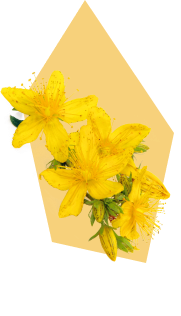
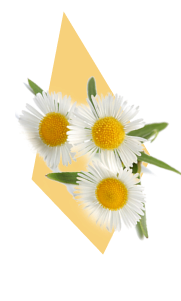
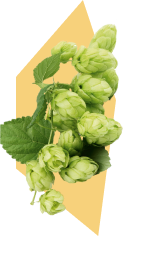
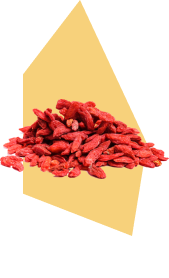
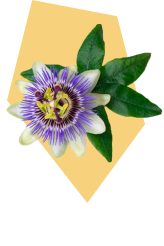
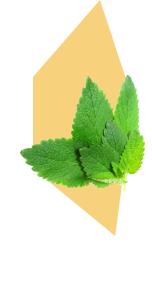
Seven of the thirteen were never drawn at all: calcium, vitamin B6, magnesium, melatonin, L-taurine, skullcap and ashwagandha. Four of those are the ones with the strongest human sleep evidence in the whole formula, which makes the illustration set a poor guide to the formula’s substance.
That is an ordinary marketing decision rather than a fault. Botanicals photograph well and a white mineral powder does not. It is worth knowing about only because the strip reads like an ingredient list and is not one.
The single graphic that comes closest to a list is the seller’s “inside” panel, and it names six: Calcium, Vitamin B6, Magnesium, Melatonin, Goji, Chamomile. The line-up strip names a different six. Neither reaches thirteen, so the seller’s written list is the one to work from.
Have any Serenity Prime ingredients been tested together?
One pair has been trialled together. One of the most-cited pairings involves a herb this bottle does not carry.
A thirteen-ingredient capsule is not thirteen trials added up. Combination effects can run either way, and the honest answer for this formula is short.
- Magnesium and vitamin B6 are the one pair in this bottle that has been given to people together. A randomised trial in restless legs syndrome ran 40 mg of B6 a day against 250 mg of magnesium oxide a day in 75 patients. It is a different condition from insomnia, and it is still the closest thing to a combination result the list contains.
- Hops and valerian is the pairing the hops evidence belongs to, and valerian is not one of the thirteen. The fixed-combination trial and the multicentre trial against diphenhydramine both tested the pair as one preparation.
- Lemon balm and valerian is the same shape of problem. The best-known lemon balm anxiolytic result comes from a combination study, which is why this page cites the single-herb crossover for lemon balm instead.
- Ashwagandha and melatonin have been run head to head and also in combination. A 2026 trial compared ashwagandha root extract, melatonin, both together and placebo over eight weeks, which makes it the most directly relevant combination study to any capsule carrying both.
- The other nine have no combination data with anything else on this list. Nobody has swallowed all thirteen together in a trial, and no formula of this size in this category has.
None of that argues against blends. It argues for reading a blend as a formulation decision rather than as a stack of thirteen separate results, and for treating the sixty-day window as the place where the question gets settled for one person.
Honest label analysis: reading the Serenity Prime list without amounts
Stated once, in full, in the section whose job it is.
This is the section that says the awkward thing once, so that the rest of the page does not have to keep hinting at it.
The seller names thirteen ingredients and no amount is published for any of them. There is no Supplement Facts panel on the bottle front, none in the vendor’s twenty-one-file image pack, and none on the seller’s own page. The back of the bottle has never been photographed, so serving size, servings per container and every %DV are unknown to this desk and to the buyer.
What follows from that is specific rather than general. Four consequences, and no more than four:
- Melatonin becomes unreadable. The trial that ran three strengths side by side settled on a few tenths of a milligram, and ten times that added nothing. Thirty-fold differences in melatonin content are ordinary in this market: an assay of thirty-one products found label content between 83 per cent below and 478 per cent above the stated figure. Without a figure there is nothing to be sceptical about.
- Two upper intake levels cannot be checked. The Institute of Medicine sets the supplemental magnesium upper intake at 350 mg a day and the B6 upper intake at 100 mg a day for adults. A blend of this kind is very unlikely to approach either, and a reader who wants to confirm that cannot.
- The St. John’s wort cannot be sized. Its interaction profile scales with hyperforin, and a capsule carrying a trace is a different proposition from one carrying a clinical dose. Both are consistent with the label.
- The trial doses stay one-sided. Every milligram figure on this website belongs to a published study. Not one of them is an amount in this capsule, and nothing here should be read as implying otherwise.
Two columns, thirteen rows. On the left the names that are already published; on the right the quantity of each, plus the hyperforin percentage that sizes the St. John’s wort. A reader could finish that comparison in a minute and this whole section would come down.
What the Serenity Prime ingredient list does not include
Five things a buyer comparing bottles will want confirmed.
Naming what is absent from a list is as useful as naming what is on it, especially for anyone comparing two bottles on a shelf.
- No valerian. The most-studied herb in this whole category is not among the thirteen. That matters specifically for the hops row, whose human evidence is valerian-combination evidence.
- No 5-HTP, no GABA, no L-theanine and no glycine. The four amino-acid-style ingredients that usually turn up in nighttime blends are all absent from the list.
- No antihistamine. This is a dietary supplement, not a sleep medicine. Diphenhydramine and doxylamine, the actives in over-the-counter sleep aids, are drugs and belong to a different aisle.
- No caffeine and no stimulant. Nothing on the list is a stimulant, which is worth confirming for an evening capsule.
- Nothing on the list is a controlled substance, and nothing on it is prescription-only in the United States.
One caveat belongs with that list, and it belongs here rather than scattered: the thirteen are the ingredients the seller names, and the capsule shell, any flow agent and any filler come from the same unpublished back label. Anyone avoiding gelatin, a specific dye or a common allergen should ask the order desk before ordering rather than assume from the front of the bottle.
Serenity Prime ingredient questions, answered
How many ingredients are in Serenity Prime?
Thirteen are named: calcium, vitamin B6, magnesium, melatonin, goji, chamomile, lemon balm, passiflora, L-taurine, hops, St. John’s wort, skullcap and ashwagandha. Eight of the thirteen are botanicals, three are minerals or vitamins, one is an amino acid and one is a hormone sold over the counter in the United States.
Is there valerian in it?
No. Valerian is not among the thirteen. That is worth knowing because the hops evidence in the literature is almost entirely valerian-and-hops evidence, so a reader who came here expecting the classic pairing should know only half of it is in the bottle.
Which ingredient has the strongest evidence?
Ashwagandha, on the strength of a ten-week randomised trial in adults whose insomnia was confirmed by actigraphy rather than self-reported, with sleep onset, efficiency and total sleep time as outcomes. Melatonin has far more trials overall, but a great many of them are small and the effect sizes are modest.
Which one has the least?
L-taurine. There is no human sleep trial of taurine at any dose. A review of its neurological activity sets out the theory, and the systematic review of its human trials covers cognition rather than sleep. It is in the formula as a mechanism, which is a legitimate thing for a formulator to do and not the same as a result.
Is it vegetarian or vegan?
The thirteen named ingredients are all plant, mineral or synthetic in origin, but the capsule shell is decided by the back label and the back label has never been photographed. Gelatin and plant-based shells are both common. Ask the order desk on +1 (302) 200-3480 before ordering if this is a requirement.
Does it contain any common allergens?
Nothing on the list of thirteen is a top-eight allergen. Chamomile is in the daisy family, so NCCIH notes that people who react to ragweed or chrysanthemums can react to it as well.
Where do the ingredients come from?
The seal shipped with the pack reads FOREIGN AND DOMESTIC INGREDIENTS, which is the ordinary case for a botanical blend of this size and the line this desk goes with. The seller’s own page describes local growers. The testing and quality page reads each seal on the pack one at a time.
Sources behind the Serenity Prime ingredient list
Every study named above, in the order the seller lists the ingredient it belongs to.
- Zhdanova IV, Wurtman RJ, Regan MM, et al. Melatonin treatment for age-related insomnia. J Clin Endocrinol Metab. 2001;86(10):4727-30. PMID 11600532. https://pubmed.ncbi.nlm.nih.gov/11600532/
- Erland LA, Saxena PK. Melatonin Natural Health Products and Supplements: Presence of Serotonin and Significant Variability of Melatonin Content. J Clin Sleep Med. 2017;13(2):275-281. PMID 27855744. https://pubmed.ncbi.nlm.nih.gov/27855744/
- Institute of Medicine (US) Standing Committee on the Scientific Evaluation of Dietary Reference Intakes. Dietary Reference Intakes for Calcium, Phosphorus, Magnesium, Vitamin D, and Fluoride. Washington (DC): National Academies Press; 1997. https://www.ncbi.nlm.nih.gov/books/NBK109825/
- Institute of Medicine (US) Standing Committee on the Scientific Evaluation of Dietary Reference Intakes. Dietary Reference Intakes for Thiamin, Riboflavin, Niacin, Vitamin B6, Folate, Vitamin B12, Pantothenic Acid, Biotin, and Choline. Washington (DC): National Academies Press; 1998. https://www.ncbi.nlm.nih.gov/books/NBK114310/
- Jadidi A, Rezaei Ashtiani A, Khanmohamadi Hezaveh A, et al. Therapeutic effects of magnesium and vitamin B6 in alleviating the symptoms of restless legs syndrome: a randomized controlled clinical trial. BMC Complement Med Ther. 2022;23(1):1. PMID 36587225. https://pubmed.ncbi.nlm.nih.gov/36587225/
- Zick SM, Wright BD, Sen A, et al. Preliminary examination of the efficacy and safety of a standardized chamomile extract for chronic primary insomnia: a randomized placebo-controlled pilot study. BMC Complement Altern Med. 2011;11:78. PMID 21939549. https://pubmed.ncbi.nlm.nih.gov/21939549/
- Chamomile. National Center for Complementary and Integrative Health, National Institutes of Health. https://www.nccih.nih.gov/health/chamomile
- Kennedy DO, Little W, Scholey AB. Attenuation of laboratory-induced stress in humans after acute administration of Melissa officinalis (Lemon Balm). Psychosom Med. 2004;66(4):607-13. PMID 15272110. https://pubmed.ncbi.nlm.nih.gov/15272110/
- Kennedy DO, Little W, Haskell CF, et al. Anxiolytic effects of a combination of Melissa officinalis and Valeriana officinalis during laboratory induced stress. Phytother Res. 2006;20(2):96-102. PMID 16444660. https://pubmed.ncbi.nlm.nih.gov/16444660/
- Brouns A, Lechtenberg M, Hensel A. Passionflower (Passiflora incarnata): Quality of Food Supplements Versus Registered Herbal Medicinal Products. Planta Med. 2025;91(9):532-540. PMID 40245939. https://pubmed.ncbi.nlm.nih.gov/40245939/
- Moore JA, Cousins AL, Taylor RMJ, et al. Cognitive Effects of Taurine and Related Sulphur-Containing Amino Acids: A Systematic Review of Human Trials and Considerations for Plant-Based Dietary Patterns. Foods. 2026;15(4). PMID 41750826. https://pubmed.ncbi.nlm.nih.gov/41750826/
- Jakaria M, Azam S, Haque ME, et al. Taurine and its analogs in neurological disorders: Focus on therapeutic potential and molecular mechanisms. Redox Biol. 2019;24:101223. PMID 31141786. https://pubmed.ncbi.nlm.nih.gov/31141786/
- Koetter U, Schrader E, Kaufeler R, et al. A randomized, double blind, placebo-controlled, prospective clinical study to demonstrate clinical efficacy of a fixed valerian hops extract combination (Ze 91019) in patients suffering from non-organic sleep disorder. Phytother Res. 2007;21(9):847-51. PMID 17486686. https://pubmed.ncbi.nlm.nih.gov/17486686/
- Morin CM, Koetter U, Bastien C, et al. Valerian-hops combination and diphenhydramine for treating insomnia: a randomized placebo-controlled clinical trial. Sleep. 2005;28(11):1465-71. PMID 16335333. https://pubmed.ncbi.nlm.nih.gov/16335333/
- Nicolussi S, Drewe J, Butterweck V, et al. Clinical relevance of St. John's wort drug interactions revisited. Br J Pharmacol. 2020;177(6):1212-1226. PMID 31742659. https://pubmed.ncbi.nlm.nih.gov/31742659/
- Di Minno A, Morone MV, Buccato DG, et al. Efficacy and Tolerability of a Chemically Characterized Scutellaria lateriflora L. Extract-Based Food Supplement for Sleep Management. Nutrients. 2025;17(9):1447. PMID 40362800. https://pubmed.ncbi.nlm.nih.gov/40362800/
- Langade D, Kanchi S, Salve J, et al. Efficacy and Safety of Ashwagandha (Withania somnifera) Root Extract in Insomnia and Anxiety: A Double-blind, Randomized, Placebo-controlled Study. Cureus. 2019;11(9):e5797. PMID 31728244. https://pubmed.ncbi.nlm.nih.gov/31728244/
- Movva N, Salve J, Wankhede K, et al. Comparative Evaluation of Ashwagandha (Withania somnifera) Root Extract and Melatonin for Improving Sleep Quality in Adults. Clocks Sleep. 2026;8(2). PMID 42029558. https://pubmed.ncbi.nlm.nih.gov/42029558/
Order Serenity Prime with the whole list in front of you
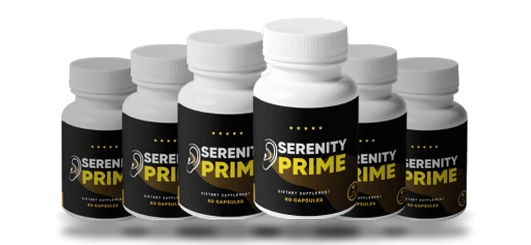
Thirteen named ingredients, 60 capsules a bottle, free US shipping on every pack and 60 days from the date of purchase to change your mind.
One bottle $69 · six bottles $294 · 60-day money-back guarantee
Order Serenity Prime On The Official Website60 capsules a bottle · lot SER-26/SE-3930 · free US shipping