Serenity Prime Official Website › Blog › Ashwagandha
Ashwagandha’s Sleep Trials, Read One At A Time
This site’s own ingredients page calls ashwagandha the strongest evidence in the formula, on the strength of a table row. A row is a summary, and a summary hides how few hands wrote the underlying trials, how the two-week doses differ from the eight-week ones, and what a five-trial meta-analysis actually pooled. This article opens the row out into the four studies behind it.
- Four human trials sit behind ashwagandha’s sleep claim: two placebo-controlled trials from one Indian research group, a five-trial systematic review and meta-analysis, and a 2026 head-to-head against melatonin.
- The best-designed of the four used wrist actigraphy, not just a questionnaire, to confirm both the insomnia at entry and the improvement afterward, over ten weeks.
- The meta-analysis found a small but real effect on sleep, strongest at doses of 600 mg a day or more, run for eight weeks or longer.
- Three of the four trials share an author or an institution: D Y Patil University School of Medicine, Navi Mumbai. That is worth knowing when weighing how independent the replication really is.
- The 2026 trial found ashwagandha and melatonin produced broadly comparable benefits alone, with the combination outperforming either one.
- None of the four trials, and no figure on this bottle, says how many milligrams of ashwagandha root extract this capsule actually contains.
Why this ingredient got its own table row
This site’s ingredients page sorts all thirteen named ingredients by how much human research each one carries, and ashwagandha sits at the top with the description “a ten-week randomised trial in people whose insomnia was confirmed by actigraphy, plus a head-to-head against melatonin.” That sentence is accurate. It is also one line standing in for four separate papers, published across seven years, by overlapping groups of authors, using different doses and different lengths of treatment.
Ashwagandha (Withania somnifera) is a shrub used for centuries in Ayurvedic medicine and sold today as a root extract, usually standardised to a percentage of withanolides. It shows up on sleep, stress and testosterone labels alike, which makes it one of the few ingredients on this bottle’s list with genuine crossover appeal. What follows is the sleep evidence specifically, trial by trial, in the order it was published.
The first trial: actigraphy in diagnosed insomnia
Langade and colleagues, published in Cureus in 2019, ran a double-blind, placebo-controlled study at Prakruti Hospital in Kalwa, Maharashtra. Sixty patients with a diagnosis of insomnia were randomised two-to-one, 40 to ashwagandha root extract and 20 to placebo, both taken twice daily with milk or water for ten weeks.
What separates this trial from most supplement research is the primary measurement tool: wrist actigraphy (a Philips Respironics device), which records movement through the night rather than asking a participant to recall it the next morning. Sleep onset latency, total sleep time, wake after sleep onset and sleep efficiency were all tracked this way, alongside the Pittsburgh Sleep Quality Index and the Hamilton Anxiety Rating Scale.
| Measure | Ashwagandha at 10 weeks | Placebo at 10 weeks | Result |
|---|---|---|---|
| Sleep onset latency | 29.00 minutes (SD 7.14) | 33.94 minutes (SD 7.65) | Significantly shorter with ashwagandha, p = 0.019 |
| Sleep efficiency | Rose from 75.63% to 83.48% | Rose from 75.14% to 79.68% | Both groups improved; ashwagandha rose further |
| Sleep quality & anxiety scores | Significant improvement, p = 0.002 for sleep quality | Smaller change | Favoured ashwagandha |
Figures from the published trial. Two participants, one from each arm, did not complete the study; the analysis above covers the remaining 58.
Both groups improved on several measures, which is unsurprising: a placebo capsule taken nightly for ten weeks, alongside the attention of a study team, tends to move sleep scores on its own. What the trial reports is that ashwagandha moved them further, on the objective actigraphy readings and not only on the questionnaires.
The second trial: healthy volunteers beside insomnia patients
A second trial from an overlapping author list, published in the Journal of Ethnopharmacology in 2021, took a different design question: does ashwagandha do anything for people who sleep normally, not only for people with diagnosed insomnia? Eighty participants were split into two arms, 40 healthy and 40 with insomnia, each further randomised to ashwagandha root extract or placebo, for eight weeks this time rather than ten.
The result draws a real distinction the site’s summary table doesn’t have room for: both groups improved, but the improvement was larger in the insomnia arm than the healthy arm. Sleep onset latency and sleep efficiency were the two measures that moved the most, each significant at p < 0.0001 by two-way ANOVA across the full dataset, with total sleep time and wake-after-sleep-onset also improving to a smaller degree.
Unlike the 2019 Cureus paper, the published abstract of this 2021 trial does not give a milligram figure for the daily dose. This desk reports what the abstract says rather than filling the gap with the 2019 trial’s dose, since a different paper, even from an overlapping author list, is not proof the same amount was used twice.
Read together, the two Langade-group trials say something a single sentence on a summary table cannot: ashwagandha’s sleep effect looks real across two separate cohorts and two different treatment lengths, and it looks bigger in people who actually have trouble sleeping than in people who don’t.
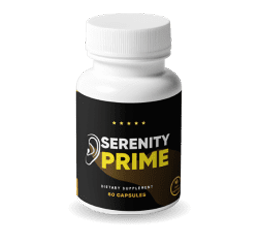
Ashwagandha is one of thirteen names on the Serenity Prime label
This desk reads the underlying trials in full rather than repeating a marketing summary, and names every one of them below.
One bottle $69 · six bottles $294 · 60-day money-back guarantee
Order Serenity Prime On The Official Website60 capsules a bottle · lot SER-26/SE-3930 · free US shipping
What five pooled trials show, and don’t
A single trial, however well designed, is one data point. Cheah and colleagues published a systematic review and meta-analysis in PLoS ONE in 2021, pooling five randomised controlled trials and 400 participants that tested ashwagandha extract against placebo for sleep outcomes.
The pooled effect on overall sleep was a standardised mean difference of −0.59 (95% confidence interval −0.75 to −0.42), which counts as small but statistically real in the conventions researchers use for this kind of analysis. The review also reported real heterogeneity across the five trials (I² = 62%), meaning the studies did not all agree closely with each other, and it narrowed down where the effect was strongest: adults with a diagnosis of insomnia specifically, doses of 600 mg a day or more, and treatment courses of eight weeks or longer.
Two secondary findings are worth carrying forward. Mental alertness on rising and anxiety scores both improved across the pooled data, and no serious adverse events were reported in any of the five trials. The review’s own caution is about safety data at longer time horizons it explicitly says the evidence for long-term use remains limited, not that the short-term trials looked unsafe.
Ashwagandha against melatonin, and against itself plus melatonin
The most recent piece of evidence is also the most directly useful for a formula, like this one, that names both ingredients. Movva and colleagues, published in Clocks & Sleep in 2026, randomised 200 adults aged 18 to 50 into four arms of 50: ashwagandha root extract at 300 mg twice daily, melatonin at 3 mg a day, the two combined at the same doses, or placebo, for eight weeks.
| Arm | Dose | Result at week 8 |
|---|---|---|
| Ashwagandha alone | 300 mg twice daily (600 mg/day) | Moderate improvement in sleep onset latency by actigraphy |
| Melatonin alone | 3 mg/day | Moderate improvement, comparable to ashwagandha alone |
| Ashwagandha + melatonin | 600 mg/day + 3 mg/day | Greatest improvement in sleep onset latency, total sleep time, wake-after-sleep-onset and sleep efficiency, all p < 0.0001 |
| Placebo | — | Smallest change of the four arms |
Sleep onset latency was the trial’s primary outcome, measured by actigraphy; the other three measures were secondary outcomes.
The practical reading is that ashwagandha and melatonin, at these specific doses, performed similarly to each other on their own, and better together than either alone, with mild adverse events reported across all four arms and no clinically significant differences between them. That is a genuinely useful finding for anyone comparing a blend against a single-ingredient product, with one large caveat covered in the next section.
One research group, three of four trials
This is the part a summary table leaves out entirely, and it belongs in an honest accounting. The 2019 Cureus trial, the 2021 Journal of Ethnopharmacology trial and the 2026 Clocks & Sleep trial all carry Dr. Deepak Langade as an author, and all three list D Y Patil University School of Medicine in Navi Mumbai among the author affiliations. Only the 2021 PLoS ONE meta-analysis, run by an independent Malaysian research group pooling data from multiple trials, sits outside that circle.
That is not a reason to dismiss the trials. All three report randomisation, blinding and placebo control, and the outcome measures, actigraphy especially, are hard to fake. It is a reason to weigh the meta-analysis’s finding of a small, real, heterogeneous effect as the more independent estimate, and to want to see a fifth trial from a different team, using a different cohort, before treating ashwagandha’s sleep effect as settled the way melatonin’s dose-response curve is settled. NCCIH’s own overview takes a similarly measured position: promising, not proven at scale.
The dose question this bottle can’t answer
Every trial above that reports a dose used somewhere between 300 and 600 mg of a standardised root extract a day: 300 mg twice daily in the 2019 trial, and the same 300 mg-twice-daily schedule again in the 2026 trial. The meta-analysis found the strongest pooled effect specifically at 600 mg a day or above. None of the four papers names a branded extract by trademark, though the consistent 300 mg-twice-daily schedule and shared authorship across three of the four trials suggest the same manufacturer’s standardised extract was very likely used in each.
This website has said before, about every ingredient on this label, that the seller publishes no Supplement Facts panel. Ashwagandha is no exception. The bottle names it as one of thirteen ingredients and states no extract ratio, no withanolide percentage and no milligram figure. Whatever this capsule contains could match the trial range above, sit well below it, or exceed it. From outside the factory there is no way to tell, which is the same honest limit this site states for melatonin, magnesium and every other named ingredient.
What this evidence does and doesn’t support
- It supports ashwagandha having a real, if modest, effect on sleep onset and sleep efficiency in adults, most clearly in people who already have trouble sleeping, at doses of 600 mg a day taken for eight weeks or longer.
- It does not support a claim that ashwagandha is stronger than melatonin as a sleep aid. The 2026 trial found the two performed comparably alone and better in combination, not that either beat the other.
- It does not tell you how much ashwagandha, if any, is in a dose that matches this or any other undisclosed-panel product, or whether the extract used here matches the standardisation used in the trials.
- It does not extend to long-term use. The longest trial ran ten weeks. Nobody has published a six-month or one-year safety study of ashwagandha for sleep specifically.
Anyone weighing this ingredient against a single-ingredient ashwagandha product bought separately is weighing a documented dose against an undocumented one, which is the same trade this site describes for every botanical on this label.
References
- Langade D, Kanchi S, Salve J, Debnath K, Ambegaokar D. Efficacy and Safety of Ashwagandha (Withania somnifera) Root Extract in Insomnia and Anxiety: A Double-blind, Randomized, Placebo-controlled Study. Cureus. 2019;11(9):e5797. PMID 31728244. https://pubmed.ncbi.nlm.nih.gov/31728244/
- Langade D, Thakare V, Kanchi S, Kelgane S. Clinical evaluation of the pharmacological impact of ashwagandha root extract on sleep in healthy volunteers and insomnia patients: A double-blind, randomized, parallel-group, placebo-controlled study. J Ethnopharmacol. 2021;264:113276. PMID 32818573. https://pubmed.ncbi.nlm.nih.gov/32818573/
- Cheah KL, Norhayati MN, Husniati Yaacob L, Abdul Rahman R. Effect of Ashwagandha (Withania somnifera) extract on sleep: A systematic review and meta-analysis. PLoS One. 2021;16(9):e0257843. PMID 34559859. https://pubmed.ncbi.nlm.nih.gov/34559859/
- Movva N, Salve J, Wankhede K, Thakare V, Langade D. Comparative Evaluation of Ashwagandha (Withania somnifera) Root Extract and Melatonin for Improving Sleep Quality in Adults: A Prospective, Randomized, Double-Blind, Placebo-Controlled Study. Clocks Sleep. 2026;8(2):15. PMID 42029558. https://pubmed.ncbi.nlm.nih.gov/42029558/
- Ashwagandha. National Center for Complementary and Integrative Health, National Institutes of Health. https://www.nccih.nih.gov/health/ashwagandha