Serenity Prime Official Website › Blog › How Much Melatonin
How Much Melatonin Do You Actually Need?
Melatonin is the one ingredient in this whole category with a settled dose answer, and the answer is smaller than almost anything on a shelf. Here is where that figure comes from, why more is not better, and why the amount printed on a bottle is worth reading sceptically even when there is one.

- In the clearest dose-ranging trial, 0.3 mg restored sleep efficiency in adults over fifty and 3.0 mg did not improve on it.
- Pooled across the literature, melatonin takes about four minutes off the time it takes to fall asleep. Real, repeatable, small.
- The market has settled around 3 mg, roughly ten times the amount that worked in that trial, and 10 mg products are common.
- Assays of melatonin products have found label content between 83 per cent below and 478 per cent above what was printed.
- The sleep-medicine guideline weighs melatonin for chronic insomnia in adults and makes a weak recommendation against it.
- Where melatonin is genuinely strong is a shifted body clock rather than a bad night.
Melatonin is a signal, not a sedative
The pineal gland releases melatonin as light falls, and the body reads it as information about what time it is. It is an announcement rather than an instruction, which is why the language people use about it is usually wrong.
A sedative works by pressing harder. Double the dose of something that sedates and you get more sedation, up to the point where that becomes a problem. Melatonin does not work like that at all, because a signal does not get clearer by being shouted.
That single distinction explains most of what goes wrong with it in practice: people take a large amount, feel nothing on the night, take more the next night, and end up groggy in the morning without ever having slept better.
The trial that answered the dose question
Most ingredients in this category have no dose answer at all. Melatonin has one, and it comes from a study designed specifically to find it.
Zhdanova and colleagues gave adults over fifty 0.1, 0.3 and 3.0 mg thirty minutes before bed, each dose for a week, and measured sleep efficiency. The 0.3 mg dose restored it. The 3.0 mg dose, ten times larger, did not improve on that result.
The reason the middle arm is the interesting one is that 0.3 mg is roughly a physiologic amount: it produces blood levels close to what the body itself reaches at night. The larger dose produces levels far above anything that occurs naturally, and those levels persist into the morning.
Why nobody talks about this trial
It is small, it is old, and it is inconvenient for anybody selling a 10 mg tablet. It is also the only study in the literature that ran three doses head to head in the same people and reported what happened at each.
Nothing published since has overturned it. The pooled analyses that came later measure the average effect across a range of doses rather than asking which dose was best, which is a different question.
How big the effect actually is
The 2005 meta-analysis pooled the exogenous melatonin trials and put the reduction in the time taken to fall asleep at around four minutes. A later pooled analysis of nineteen trials reached a similar order of magnitude, with a median dose across the literature of about 3 mg and a range from 0.1 to 10 mg.
Four minutes is a real effect that survived randomisation against placebo. It is also four minutes, and a person expecting to be switched off will call that nothing.
This is where expectation does most of the damage in the category. Somebody who thinks a sleep supplement should work like a sleeping tablet will abandon a product that is doing exactly what the evidence says it does.
| Dose | Where it comes from | What happened |
|---|---|---|
| 0.1 mg | The lowest arm of the dose-ranging trial in adults over fifty | Below the amount that restored sleep efficiency in that trial |
| 0.3 mg | The middle arm of the same trial | Restored sleep efficiency. This is the physiologic amount, close to what the body itself releases |
| 3.0 mg | The highest arm of the same trial, and the market's median | Did not improve on 0.3 mg. Ten times the dose, no additional benefit |
| 0.5 to 5 mg | The jet-lag literature, taken close to the destination bedtime | Where melatonin's evidence is at its strongest, for a shifted clock rather than a broken night |
| 5 to 10 mg | Common on supermarket shelves | Above anything the dose-ranging work supports, and the amount most associated with next-morning grogginess |
Doses as the published trials used them. None of them is an amount in any particular product.
Why the market settled ten times higher
If 0.3 mg is the answer, why does almost every bottle carry 3, 5 or 10 mg?
Part of it is that larger numbers sell. A shopper comparing two bottles with no other information will read 10 mg as stronger than 1 mg, and on a shelf that is the only comparison available.
Part of it is that the effect is small at every dose, so nobody notices the difference between a well-chosen amount and a large one. What they do notice is the grogginess that comes with the large one, which is then attributed to the supplement working.
And part of it is simply inertia. Once a category has standardised on a number, every new product matches it.
What the guideline says
The American Academy of Sleep Medicine weighed melatonin for chronic insomnia in adults and issued a weak recommendation against it. That is not the same as saying it does nothing; it is saying the evidence for treating a diagnosis of insomnia with it does not support recommending it.
Read alongside the dose-ranging trial, the two sit together comfortably. A small physiologic dose has a small measurable effect on sleep efficiency. Neither of those facts makes it a treatment for insomnia.
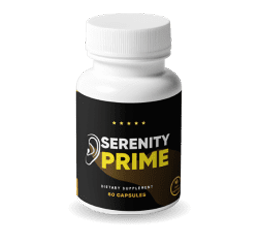
Thirteen names, including melatonin, on the Serenity Prime label
The seller names melatonin fourth of thirteen. This desk prints the amount each ingredient’s own research used, and says plainly which figures come with the bottle instead.
One bottle $69 · six bottles $294 · 60-day money-back guarantee
Order Serenity Prime On The Official Website60 capsules a bottle · lot SER-26/SE-3930 · free US shipping
The reason a printed figure still needs scepticism
Even a bottle that prints a melatonin amount is telling you what the manufacturer intended rather than what the capsule holds, and this is the one ingredient where that gap has been measured repeatedly.
An assay of thirty-one melatonin products found content ranging from 83 per cent below the label figure to 478 per cent above it. The same work detected serotonin in a number of the products, which nothing on their labels predicted.
A 2023 analysis published in JAMA looked at twenty-five melatonin gummy products sold in the United States and found the same problem intact, six years later, in the format most likely to be given to a child.
| What was assayed | When | What was found |
|---|---|---|
| Thirty-one melatonin products sold as natural health products | 2017 | Content ranged from 83 per cent below the label figure to 478 per cent above it |
| The same products, for a second compound | 2017 | Serotonin was detected in a number of them, which nothing on the label predicted |
| Twenty-five melatonin gummy products sold in the US | 2023 | The same problem, five years later, in the format most likely to be bought for a child |
Two assays, six years apart, on the ingredient with the clearest dose answer in the category.
Two conclusions follow from that, and they are different in kind. The first is that a printed melatonin figure should be read as an intention rather than a measurement. The second is that an unprinted one cannot be read at all: there is nothing to be sceptical about.
The mark that would answer this is an independent content test, and it is the one thing worth looking for on any melatonin product. The seal audit on this website found none on this pack, which is the ordinary state of affairs in this category.
Timing matters more than size
If a signal is what melatonin sends, the hour it is sent at is more important than how loudly it is sent. The dose-ranging trial gave its doses thirty minutes before bed, and that is the tightest timing evidence in the whole formula.
Two practical consequences follow. Taking it at a different hour each night sends a different message each night, which is the opposite of what a body clock needs. And taking it and then looking at a bright screen at close range sends the opposite message entirely.
The place melatonin genuinely earns its reputation is a clock that has moved: a flight across several time zones, or a shift pattern that has rotated. That is a timing problem and melatonin is a timing tool.
What all this means inside a thirteen-ingredient blend
A blend containing melatonin raises a question a single-ingredient tablet does not. With a plain melatonin tablet you can read the figure, distrust it a little, and still know roughly where you are.
With Serenity Prime the thirteen names are published and the quantities come with the bottle, so the one number that decides whether the capsule does anything is the one a buyer cannot check before ordering. The label page on this website records exactly where that figure was looked for.
That is not a reason to dismiss a blend. It is a reason to be clear about what you are buying: a formulation judgement and a single evening routine, rather than a measurable dose of anything in particular.
It also has a practical edge. If you already take a melatonin tablet that works, adding a blend containing melatonin means taking a known amount plus an unknown one, and that is the combination worth avoiding.
- Run one melatonin product at a time, not two.
- If a blend is doing nothing after eight weeks, a plain low-dose melatonin taken at a fixed hour is a cheap and readable experiment.
- Keep any bottle containing melatonin out of reach of children, whatever else it contains.
- Judge it on a four-week average rather than on a single night, because sleep varies enormously from one night to the next.
Six practical rules
- Start low. If you are choosing a melatonin product, the evidence points at tenths of a milligram rather than at 10 mg.
- Fix the hour. The same time every night matters more than the exact time.
- Dim the last hour. A bright screen at close range is a stronger signal than the capsule.
- Expect minutes. Around four minutes off the time taken to fall asleep is what the pooled data supports.
- Treat a label figure as an intention. Two separate assays, six years apart, found it is often not what is in the bottle.
- Give it four weeks before deciding, and stop if it makes your mornings worse. Grogginess usually means the dose is too large or the hour is too late.
None of that is complicated and none of it is expensive. The uncomfortable part is that the most useful thing to know about a melatonin product is the one thing the front of the bottle will never tell you.
References
- Zhdanova IV, Wurtman RJ, Regan MM, et al. Melatonin treatment for age-related insomnia. J Clin Endocrinol Metab. 2001;86(10):4727-30. PMID 11600532. https://pubmed.ncbi.nlm.nih.gov/11600532/
- Brzezinski A, Vangel MG, Wurtman RJ, et al. Effects of exogenous melatonin on sleep: a meta-analysis. Sleep Med Rev. 2005;9(1):41-50. PMID 15649737. https://pubmed.ncbi.nlm.nih.gov/15649737/
- Ferracioli-Oda E, Qawasmi A, Bloch MH. Meta-analysis: melatonin for the treatment of primary sleep disorders. PLoS One. 2013;8(5):e63773. PMID 23691095. https://pubmed.ncbi.nlm.nih.gov/23691095/
- Sateia MJ, Buysse DJ, Krystal AD, et al. Clinical Practice Guideline for the Pharmacologic Treatment of Chronic Insomnia in Adults: An American Academy of Sleep Medicine Clinical Practice Guideline. J Clin Sleep Med. 2017;13(2):307-349. PMID 27998379. https://pubmed.ncbi.nlm.nih.gov/27998379/
- Erland LA, Saxena PK. Melatonin Natural Health Products and Supplements: Presence of Serotonin and Significant Variability of Melatonin Content. J Clin Sleep Med. 2017;13(2):275-281. PMID 27855744. https://pubmed.ncbi.nlm.nih.gov/27855744/
- Cohen PA, Avula B, Wang YH, et al. Quantity of Melatonin and CBD in Melatonin Gummies Sold in the US. JAMA. 2023;329(16):1401-1402. PMID 37097362. https://pubmed.ncbi.nlm.nih.gov/37097362/