Serenity Prime Official Website › Blog › Passionflower trials
Passionflower For Sleep: Tea, Drops Or Capsule?
“Passionflower” on a label is a plant name, not a product. In the published human trials it turns up as a cup of tea, as forty-five drops of a liquid extract, as a single capsule before surgery and as a daily capsule taken at bedtime for a month. The amounts run from a cup of tea to 600 mg a day. So when somebody says passionflower helps with sleep, the useful follow-up is always the same: which one, how much, and for whom?

- Passiflora is one of thirteen names on the Serenity Prime list. The bottle face prints no amount and no Supplement Facts panel, so nothing here is a dose in this capsule.
- The tea trial (41 healthy adults, a cup for seven days) improved one of six sleep-diary measures: sleep quality, self-rated. The other five did not move.
- The two capsule trials in people with insomnia or stress used amounts ten times apart, 60 mg a day for two weeks (as a later paper describes it) and 600 mg a day for 30 days, and both reported an increase in total sleep time.
- The drop-extract trial and the pre-surgery trial were about anxiety, not sleep. The Cochrane review of passiflora for anxiety found two studies and said they were too few to conclude anything.
- A 2025 laboratory comparison found five of six passionflower food supplements did not meet the specified content and identity, while all the registered herbal medicines did.
- The National Center for Complementary and Integrative Health says passionflower taken with anaesthesia drugs might slow the nervous system too much, and advises against it in pregnancy.
One plant name, three things to swallow
Most ingredient articles on this site can follow one preparation through the literature. Passionflower can’t be followed that way, because the studies don’t share one. The ingredients page already counts “three human results in three different preparations: a tea, a tincture and one pre-surgical capsule.” That count is right as far as it goes. It leaves out the two capsule trials that measured sleep in people with insomnia or stress, and that is where the most useful comparison sits.
So this article sorts by preparation instead of by date. Tea, then drops, then capsules, then the quality question that decides whether any of it transfers to a supplement you can buy.
What the Serenity Prime label says about it
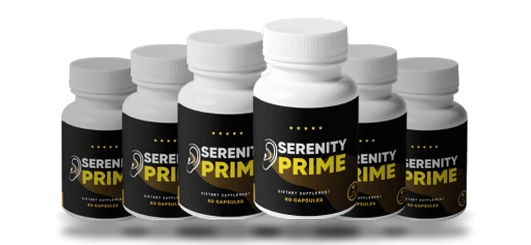
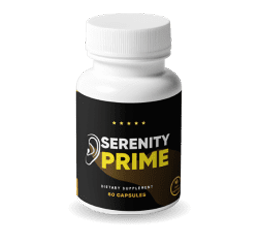
The seller lists Passiflora incarnata as passiflora, eighth of the thirteen names, and the vendor drew it as one of six botanical cut-outs. The bottle face carries the brand, the words DIETARY SUPPLEMENT and 60 CAPSULES. This website’s label page records that no Supplement Facts panel appears in the vendor’s image pack or on the seller’s page, and that the back of the bottle has never been photographed.
Two consequences. Nobody outside the factory can say how much passiflora a capsule holds, or whether it is printed individually or grouped in a blend total. And nobody can say what the extract is: the plant part, the extraction solvent and the ratio are all unstated. The trials below describe “aerial parts” and “above-ground plant material,” which is the leaf, stem and flower rather than the root. Every amount in this article belongs to a published study.
The tea: 41 people, seven days, one measure moved
The oldest human sleep trial of passionflower is Ngan and Conduit’s 2011 study in Phytotherapy Research. It was a double-blind, placebo-controlled crossover: 41 participants aged 18 to 35 drank a cup of passionflower tea for a week, then a cup of placebo tea for a week (or the reverse), with a one-week washout in between. They kept a sleep diary throughout and completed an anxiety inventory on the seventh morning. Ten of the 41 also had an overnight polysomnography recording on the last night of each week.
Of the six sleep-diary measures analysed, one came out better on passionflower: sleep quality, as the participant rated it (t(40) = 2.70, p < 0.01). The other five did not. The authors describe the amount as a low dose and the benefit as short-term and subjective, in healthy adults with mild fluctuations in sleep quality.
That description is worth holding onto. These weren’t people with insomnia. They were young adults who slept more or less fine, and the thing that shifted was how they felt about it the next morning. It is a real result, and it is a result about a tea, which is a very different delivery from a capsule of unknown extract strength. The abstract doesn’t report any polysomnography difference.
The drops: an anxiety trial against a prescription drug
The trial most often cited in favour of passionflower isn’t a sleep trial at all. Akhondzadeh and colleagues (2001) randomised 36 outpatients with generalised anxiety disorder to 45 drops a day of a passiflora extract plus a placebo tablet, or to 30 mg a day of oxazepam, a benzodiazepine, plus placebo drops, for four weeks. Both groups improved and the two protocols did not differ significantly at the end. Oxazepam worked faster. Significantly more problems with job performance turned up on oxazepam.
Notice what that design can and can’t say. It compares two active treatments with no placebo-only arm, so “as good as oxazepam” does not by itself mean “better than nothing.” It measured anxiety, not sleep. And its dose is counted in drops of an extract that no capsule maker is obliged to match. It was described by its own authors as a pilot, and they called for a larger trial.
The capsules: two sleep trials, ten times apart in amount
The trials that matter most for a sleep capsule are two recent ones, and they used very different amounts.
Lee and colleagues (2020), in Korea, randomised 110 adults who met DSM-5 criteria for insomnia disorder to passionflower extract or placebo for two weeks. Everyone had an overnight polysomnography recording, plus sleep diaries and the Insomnia Severity Index and Pittsburgh questionnaires. Total sleep time changed by 23.05 ± 54.26 in the passionflower group against −0.16 ± 53.12 in the placebo group, P = 0.049. The abstract does not state the unit, and total sleep time on polysomnography is conventionally reported in minutes. Sleep efficiency and time awake after falling asleep improved within the passionflower group after two weeks, but neither differed significantly from placebo. The authors call for further study.
Look at that P value and that spread together. A mean gain of about 23 with a spread of about 54 is a result that could have gone the other way in a rerun. It is, nonetheless, one of very few passiflora results measured by polysomnography rather than by asking people how they slept.
Harit and colleagues (2024) gave 65 participants with stress and insomnia either a standardised extract of the aerial parts of Passiflora incarnata or placebo at bedtime for 30 days. In the full text the daily amount is 600 mg. The passionflower group showed a statistically significant fall in Perceived Stress Scale score, a significantly higher total sleep time compared with placebo, and better general psychological health on the 12-item General Health Questionnaire at day 15 and day 30. No adverse effects were reported. The authors declare financial relationships, set out in the paper’s disclosure section, which is worth reading before weighing it.
Here is the comparison that no article on the seller’s site would volunteer. The Harit paper itself describes the earlier Korean study as using 60 mg a day for two weeks, and suggests that a lower amount and a shorter duration may explain why several secondary measures there didn’t reach significance. That is the authors’ reasoning rather than a tested finding, but it makes the point: the two capsule trials differ by a factor of ten in amount and by a factor of two in length, and the abstracts don’t say the extracts were the same. A reader who sees “passionflower improves total sleep time” is reading a sentence that covers both.
The single dose before surgery, and what “no sedation” means here
Movafegh and colleagues (2008) gave 60 ambulatory-surgery patients either 500 mg of oral passiflora or placebo as premedication 90 minutes before the operation. Anxiety scores were significantly lower in the passiflora group (P < 0.001). Sedation scores were similar in the two groups, and recovery of psychomotor function afterwards was comparable. The authors conclude that oral passiflora as premedication reduces anxiety without inducing sedation.
That last phrase is the interesting one for a sleep product. If a single 500 mg dose calmed people without making them more sedated than placebo, then the effect being measured wasn’t sleepiness. Whatever passionflower may do for sleep at night, this trial suggests it doesn’t do it by acting like a sedative in the hour after you swallow it. That may be good news or an unmet expectation, depending on what the buyer thought they were getting.
What the two reviews conclude
Two systematic reviews frame the picture, and they are separated by 13 years.
The Cochrane review by Miyasaka, Atallah and Soares (2007) found two eligible studies with 198 participants in total. Based on one study, passiflora and a benzodiazepine did not differ in efficacy; findings on job performance and drowsiness leaned towards passiflora but neither reached statistical significance. Its conclusion is plain: the trials were too few to permit any conclusions.
Janda and colleagues (2020) included nine randomised trials, lasting from one day to 30 days, searched up to October 2019. Most reported lower anxiety after passiflora preparations, with the effect less evident in people whose anxiety was mild, and no adverse effects, including memory loss, were observed. They conclude passiflora may be helpful for some neuropsychiatric symptoms. Note the duration ceiling: the longest trial in that review ran 30 days, the same length as the later 600 mg trial above.
What is actually in a passionflower supplement
Everything above assumes that the product in the trial and the product on the shelf are the same thing. For passionflower, there is a paper that tests that assumption. Brouns, Lechtenberg and Hensel (2025) in Planta Medica compared passionflower food supplements against registered herbal medicinal products using validated laboratory protocols. Thin-layer chromatography fingerprinting showed five of the food supplements were not identical to the specified passionflower material, while six products met the specification: five registered medicines and one supplement. A liquid chromatography method confirmed it, and mass spectrometry found one supplement containing only hyperoside and lacking the other passionflower-related compounds. By quantitative flavone testing, five of the six food supplements did not meet the specified content and identity. All registered herbal medicines conformed. The authors describe the pattern as suggesting instances of food fraud and call for batch-by-batch testing.
This was a small sample, framed around the European market, where a “registered herbal medicinal product” is a defined category. It doesn’t test any Serenity Prime capsule, and it doesn’t say the finding applies to United States supplements. What it does show is that for this specific herb, in this specific comparison, a label naming passionflower was not a reliable guide to what was inside. This website’s testing and quality page sets out what the seals on the pack do and do not prove, and it is the right next read.
Every human trial in one table
Laid flat, the preparation differences are hard to miss. Every row is a published study; none is a statement about this capsule.
| Study | Who | What they took | Length | What was measured | Result |
|---|---|---|---|---|---|
| Ngan 2011 | 41 healthy adults, 18 to 35 | A cup of passionflower tea | 7 days | Six sleep-diary measures | Sleep quality better; five others not |
| Akhondzadeh 2001 | 36 outpatients with GAD | 45 drops a day of extract, vs oxazepam 30 mg | 4 weeks | Anxiety | No significant difference between the two |
| Movafegh 2008 | 60 surgery patients | 500 mg once | 90 minutes before surgery | Anxiety and sedation | Less anxiety, no added sedation |
| Lee 2020 | 110 adults with insomnia disorder | Extract, 60 mg a day as described by a later paper | 2 weeks | Polysomnography, diaries, questionnaires | Total sleep time up (P = 0.049) |
| Harit 2024 | 65 adults with stress and insomnia | 600 mg a day of standardised extract at bedtime | 30 days | Stress scale, insomnia index, general health | Less stress, higher total sleep time |
GAD is generalised anxiety disorder. The Lee amount is as reported in the Harit paper’s discussion; the Lee abstract does not state it.
Passiflora is one of thirteen names on the Serenity Prime label
The trials used stated amounts of stated preparations. This desk names that gap rather than assuming an answer to it.
One bottle $69 · six bottles $294 · 60-day money-back guarantee
Order Serenity Prime On The Official Website60 capsules a bottle · lot SER-26/SE-3930 · free US shipping
Safety, as the National Institutes of Health put it
The National Center for Complementary and Integrative Health’s passionflower fact sheet is short and worth reading in full. It says passionflower’s effect on anxiety and other conditions hasn’t been studied extensively; that a small amount of research suggests oral passionflower might help reduce anxiety, including anxiety before a surgical or dental procedure, but that conclusions are not definite; and that a small amount of research suggests it might improve total sleep time in adults with insomnia, though effects on the time it takes to fall asleep and stay asleep are mixed.
On safety it says passionflower may be safe as a tea for up to seven nights and that daily use of extract may be safe for up to eight weeks. Possible side effects include drowsiness, dizziness and confusion. Taken with anaesthesia or other medications used before and after surgery it might slow the nervous system too much, so it advises talking to a healthcare provider if you are taking passionflower within two weeks of scheduled surgery. It says passionflower should not be used during pregnancy as it may induce uterine contractions, and that little is known about breastfeeding.
The practical reading: an evening capsule is a daily habit, so the eight-week and two-week-before-surgery points apply to it more than the seven-night tea point does. Anyone with an operation booked, or on a prescribed sedative, should raise this formula with their prescriber before the first capsule. The side effects page covers the rest of the list.
Why a rat study keeps appearing in the marketing
Search for passionflower and sleep and a laboratory study with a rat in it is not far away. Guerrero and Medina (2017) implanted electrodes in male Wistar rats and injected a passiflora extract intraperitoneally at 500 mg per kilogram of body weight. Total sleep time rose, driven by more slow-wave sleep and less wakefulness, and time in REM sleep showed a decreasing tendency.
It is careful work and it is not a human result. An injection into the abdominal cavity of a rat at a dose scaled to its body weight is a different exposure from a capsule swallowed by an adult, and nothing in the paper tells you what an oral human amount would do. It belongs in the story as a reason researchers looked at people. It doesn’t belong in a sentence that begins “studies show.”
What this evidence does and does not support
Fairly read, the passionflower literature supports a small number of statements. A tea improved self-rated sleep quality over a week in healthy young adults, and nothing else in that trial moved. Two capsule trials in people with insomnia or stress reported more total sleep time, at amounts ten times apart, from extracts not stated to be the same. Anxiety trials, including one against a benzodiazepine, are positive but tiny and not about sleep. And the one paper that tested supplements against registered medicines found the supplements mostly didn’t match.
It doesn’t support any claim about a capsule whose amount and extract type aren’t published, which is the position with this bottle. The useful move is the one this site keeps arriving at: ask the order desk on +1 (302) 200-3480 to read you the back label, see whether a passiflora amount is printed, and check it against the 60 to 600 mg a day the capsule trials used, remembering that even a matching number is a comparison of amounts, not of outcomes.
For another herb on the list read by who was in the trials, see the article on chamomile; for two others in the same calming family of names, see lemon balm and skullcap. And for the general habit of reading a supplement panel, how to read a sleep supplement label is the place to start.
References
- Ngan A, Conduit R. A double-blind, placebo-controlled investigation of the effects of Passiflora incarnata (passionflower) herbal tea on subjective sleep quality. Phytother Res. 2011;25(8):1153-9. PMID 21294203. https://pubmed.ncbi.nlm.nih.gov/21294203/
- Akhondzadeh S, Naghavi HR, Vazirian M, Shayeganpour A, Rashidi H, Khani M. Passionflower in the treatment of generalized anxiety: a pilot double-blind randomized controlled trial with oxazepam. J Clin Pharm Ther. 2001;26(5):363-7. PMID 11679026. https://pubmed.ncbi.nlm.nih.gov/11679026/
- Movafegh A, Alizadeh R, Hajimohamadi F, Esfehani F, Nejatfar M. Preoperative oral Passiflora incarnata reduces anxiety in ambulatory surgery patients: a double-blind, placebo-controlled study. Anesth Analg. 2008;106(6):1728-32. PMID 18499602. https://pubmed.ncbi.nlm.nih.gov/18499602/
- Lee J, Jung HY, Lee SI, Choi JH, Kim SG. Effects of Passiflora incarnata Linnaeus on polysomnographic sleep parameters in subjects with insomnia disorder: a double-blind randomized placebo-controlled study. Int Clin Psychopharmacol. 2020;35(1):29-35. PMID 31714321. https://pubmed.ncbi.nlm.nih.gov/31714321/
- Harit MK, Mundhe N, Tamoli S Sr, Pawar V, Bhapkar V, Kolhe G, Mahadik S, Kulkarni A, Agarwal A. Randomized, Double-Blind, Placebo-Controlled, Clinical Study of Passiflora incarnata in Participants With Stress and Sleep Problems. Cureus. 2024;16(3):e56530. PMID 38646244. https://pubmed.ncbi.nlm.nih.gov/38646244/
- Miyasaka LS, Atallah AN, Soares BG. Passiflora for anxiety disorder. Cochrane Database Syst Rev. 2007;(1):CD004518. PMID 17253512. https://pubmed.ncbi.nlm.nih.gov/17253512/
- Janda K, Wojtkowska K, Jakubczyk K, Antoniewicz J, Skonieczna-Zydecka K. Passiflora incarnata in Neuropsychiatric Disorders-A Systematic Review. Nutrients. 2020;12(12):3894. PMID 33352740. https://pubmed.ncbi.nlm.nih.gov/33352740/
- Brouns A, Lechtenberg M, Hensel A. Passionflower (Passiflora incarnata): Quality of Food Supplements Versus Registered Herbal Medicinal Products. Planta Med. 2025;91(9):532-540. PMID 40245939. https://pubmed.ncbi.nlm.nih.gov/40245939/
- Guerrero FA, Medina GM. Effect of a medicinal plant (Passiflora incarnata L) on sleep. Sleep Sci. 2017;10(3):96-100. PMID 29410738. https://pubmed.ncbi.nlm.nih.gov/29410738/
- Passionflower. National Center for Complementary and Integrative Health, National Institutes of Health. https://www.nccih.nih.gov/health/passionflower