Serenity Prime Official Website › Blog › Which ingredients have sleep research?
Which Serenity Prime Ingredients Have Human Sleep Research Behind Them?
A long ingredient list can hide a short evidence list. This article sorts the 13 names by what has actually been tested in people.
Six of the 13 names, ashwagandha, melatonin, magnesium, chamomile, skullcap and passiflora, have been given to people in a trial with a sleep result. Others are linked to sleep only by surveys, dreams, stress or a partner herb. The studies used stated doses. They did not test this capsule.

Key facts
- Six of the 13 names have been tested for sleep in people: ashwagandha, melatonin, magnesium, chamomile, skullcap and passiflora.
- Ashwagandha has the cleanest result: 300 mg of root extract twice daily for ten weeks in people with confirmed insomnia.
- Melatonin has the most studies and small effects. In older adults, 0.3 mg worked and 3.0 mg did no better.
- No human sleep trial of L-taurine exists, at any dose.
- Every positive human hops result had valerian beside it. There is no valerian in this bottle.
- Trial doses are not this capsule's amounts, which are not published. No trial has tested all 13 together.
Which Serenity Prime ingredients have a human sleep trial?
Ask the question for each name and you get three piles. Some were tested for sleep. Some were tested for something close to it. Some are in the formula on reasoning alone.
| Ingredient | Human sleep trial? | What the research measured |
|---|---|---|
| Ashwagandha | Yes, directly | Sleep onset, efficiency and total sleep time over ten weeks |
| Melatonin | Yes, directly | Sleep efficiency at three doses in adults over fifty |
| Magnesium | Yes, directly | Sleep time and efficiency over eight weeks in older adults |
| Chamomile | Yes, twice, with different answers | Sleep-diary results in one trial, sleep-quality scores in another |
| Skullcap | Yes, once | Sleep-quality scores over 56 days |
| Passiflora | Yes, as a tea | Subjective sleep quality over seven nights |
| Goji | Partly | Sleep quality as one of many measures in a 14-day juice trial |
| Lemon balm | Adjacent | A lab stress measure after one dose |
| Vitamin B6 | Adjacent | Dream recall over five nights. Sleep did not move. |
| Calcium | Surveys only | Diet and sleep length in national survey data |
| Hops | Only with valerian | Fixed hops and valerian mixes |
| St. John's wort | No | Depressed mood, and drug interaction studies |
| L-taurine | No | Thinking skills in people, sleep in animals |
Each row describes published research on the ingredient. None describes this capsule.
Count the first six and you have the part of the list that stands on sleep trials. The next three are close cousins. The last four are there on reasoning, which is a fair choice for a formulator as long as nobody claims more.
What does the melatonin research say?
Melatonin has far more studies than any other name here, and the effects are small. Pooled data puts the change in time taken to fall asleep at about four minutes.
The most useful study for this capsule is a dose-ranging trial in adults over fifty. It gave 0.1, 0.3 and 3.0 mg, each for a week. The middle dose restored sleep efficiency, and the dose ten times larger did no better. So more was not stronger.
Two more facts shape how to read it. The American Academy of Sleep Medicine makes a weak recommendation against melatonin for chronic insomnia in adults. And melatonin does best when the body clock is shifted, as in jet lag. A Cochrane review is the friendliest evidence it has.
Finally, product quality varies. An assay of thirty-one melatonin products found content from 83% under to 478% over the label. That is why an unprinted melatonin amount is the single biggest unknown in this capsule.
How strong is the magnesium case?
Magnesium has one clear trial and a small pooled analysis. The trial gave 500 mg a day for eight weeks to older adults with primary insomnia. It reported gains in sleep time and efficiency. A pooled analysis of three trials put the shortening of sleep onset at roughly seventeen minutes.
Keep the caveats in view. Both pieces of research are small and in older adults. And pooled trials ran at 320 to 720 mg a day. The Institute of Medicine's upper limit for supplemental magnesium is 350 mg a day, so the trial dose sat above the everyday ceiling, on purpose and under supervision.
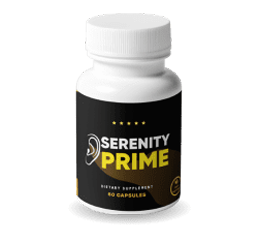
Curious how the packs are priced?
The checkout lists each pack and today's price, with a 60-day guarantee on all of them.
See today's price and guaranteeDisclosure: Serenityprimes earns a commission when you order through this button.
Why does ashwagandha lead the Serenity Prime list on evidence?
One reason is design. The ten-week insomnia trial used 300 mg of root extract twice daily, and it enrolled people whose insomnia was confirmed by a wrist monitor, not just by memory. It reported gains in sleep onset, efficiency and total sleep time.
A second reason is company. A 2026 trial compared ashwagandha root extract with melatonin, with both together and with placebo over eight weeks. That makes it the nearest thing to a study of a capsule that carries both.
There is a trade-off. Ashwagandha has rare, documented reports of liver injury, covered in the NIH LiverTox monograph. Anyone with a liver condition should treat it as a decision to discuss with a clinician.
What about chamomile, skullcap and passiflora?
These three have human results, but they are thin, short or mixed.
- Chamomile. A 28-day trial in primary insomnia gave 270 mg twice daily and did not beat placebo on the sleep diaries. A trial in nursing-home residents used 200 mg twice daily and improved sleep-quality scores. A longer anxiety trial used 1,500 mg a day.
- Skullcap. A 2025 trial gave 400 mg a day for 56 days to 66 people with mild to moderate insomnia and reported better sleep quality. An earlier mood study used 350 mg three times daily and found no change in anxiety in people who were not anxious.
- Passiflora. A week of one cup of tea a night improved subjective sleep quality. A single 500 mg dose before day surgery reduced anxiety. Another, four weeks long and run against oxazepam, used a tincture at 45 drops a day. Each used a different form.
Lemon balm sits next to this group. Its best result is a single-dose crossover in which 600 mg blunted a lab stress test and 300 mg did not. It is a stress result, not a sleep result.
Which ingredients rest on weaker ground?
Six names are there for other reasons.
- Hops. All positive human results combine it with 500 mg of valerian. The only hops-alone signal is a night-time glass of non-alcoholic beer. This capsule has no valerian.
- St. John's wort. Its research is mostly about depressed mood, plus a well-known set of drug interactions at 900 mg a day.
- L-taurine. There is no human sleep trial at any dose.
- Calcium. The link to sleep comes from nutrition surveys, not trials.
- Vitamin B6. A five-night study at 240 mg changed dream recall and left sleep alone.
- Goji. The one trial used 120 mL of standardised juice a day for 14 days, which is not a capsule fraction.
What can this research not tell you about the capsule?
Three limits apply to everything above.
The doses are not this capsule's doses. They belong to the trials, and the capsule's amounts are not published. The plant parts may differ too. Skullcap is a good example: both trials used the American species, and a different skullcap is common in supplements.
No trial has tested all 13 together, and the one pair given together, magnesium with vitamin B6, was studied in restless legs, not insomnia. So read the list as the plausibility behind a formula, not as thirteen results added up.
That is why the 60-day guarantee matters. It lets you settle the question for one person, which research on single ingredients never can.
Which studies are named here?
Every study below is one the seller's pages name. They describe single ingredients at stated doses.
- The dose-ranging trial in older adults
- The 2005 meta-analysis in Sleep Medicine Reviews
- The American Academy of Sleep Medicine's prescribing guideline
- The Cochrane review of melatonin for jet lag
- An assay of thirty-one melatonin products
- The magnesium insomnia trial
- A meta-analysis of oral magnesium for insomnia
- The Institute of Medicine reference intakes
- The ashwagandha insomnia trial
- The 2026 head-to-head against melatonin
- The NIH LiverTox monograph on ashwagandha
- The chamomile insomnia trial
- The chamomile trial in older adults
- The long-term chamomile trial in generalized anxiety disorder
- The American skullcap mood study
- The 2025 skullcap sleep trial
- The passionflower tea sleep study
- The pre-operative passionflower trial
- The passionflower versus oxazepam trial
- The lemon balm stress trial
- The fixed valerian-hops trial
- The non-alcoholic beer actigraphy study
- A systematic review of taurine's human trials
- The pyridoxine dreaming trial
- The NHANES short-sleep micronutrient analysis
- The GoChi juice trial
- NCCIH's guidance on using supplements wisely
- Serenity Prime ingredients page
Frequently asked questions
Which Serenity Prime ingredient has the best sleep evidence?
Ashwagandha. Its ten-week trial used a wrist monitor to confirm insomnia and reported gains in sleep onset, efficiency and total sleep time.
Does melatonin work for sleep?
Pooled data shows a small effect of about four minutes off the time to fall asleep. The amount matters, and this capsule does not publish it.
Is there research on L-taurine and sleep?
No human sleep trial exists at any dose. It is in the formula on reasoning, not on a result.
Does hops help sleep on its own?
Every positive human result used hops with valerian. The only hops-alone signal is non-alcoholic beer, and this capsule has no valerian.
Do the trials prove Serenity Prime works?
No. They tested single ingredients at stated doses. This capsule's amounts are not published, and no trial has tested all 13 together.
Which ingredient has a safety catch?
St. John's wort, which can lower the blood level of many prescription medicines. Ashwagandha has rare liver reports.
Serenity Prime is a dietary supplement, not a drug. It is not FDA approved, and no dietary supplement is. These statements have not been evaluated by the Food and Drug Administration. This product is not intended to diagnose, treat, cure or prevent any disease. Take medical questions to your doctor or pharmacist.
Our view
On paper this is a better-researched list than many on the shelf. Six of the 13 have been tested for sleep in people, and two of those, ashwagandha and melatonin, have real weight.
On the other side, four names are there for reasons other than sleep results, and the amounts that would let you compare the capsule with any trial are missing. The research makes the formula plausible. It does not make it proven.
Use it as a reason to try with realistic expectations, effects measured in minutes and built over weeks, and with the guarantee as your safety net.
Want to test it for yourself?
If the evidence tiers seem fair to you, the official checkout is the route that carries the 60-day guarantee.
See today's price and guaranteeDisclosure: Serenityprimes earns a commission when you order through this button.